Dental Clinical Notes & Documentation | Elva
ElvaAI Free Consultation
Elva AI
Free AI Readiness Consultation
InsuranceComplete Clinical Documentation

Give Every Claim the Documentation It Needs to Get Paid

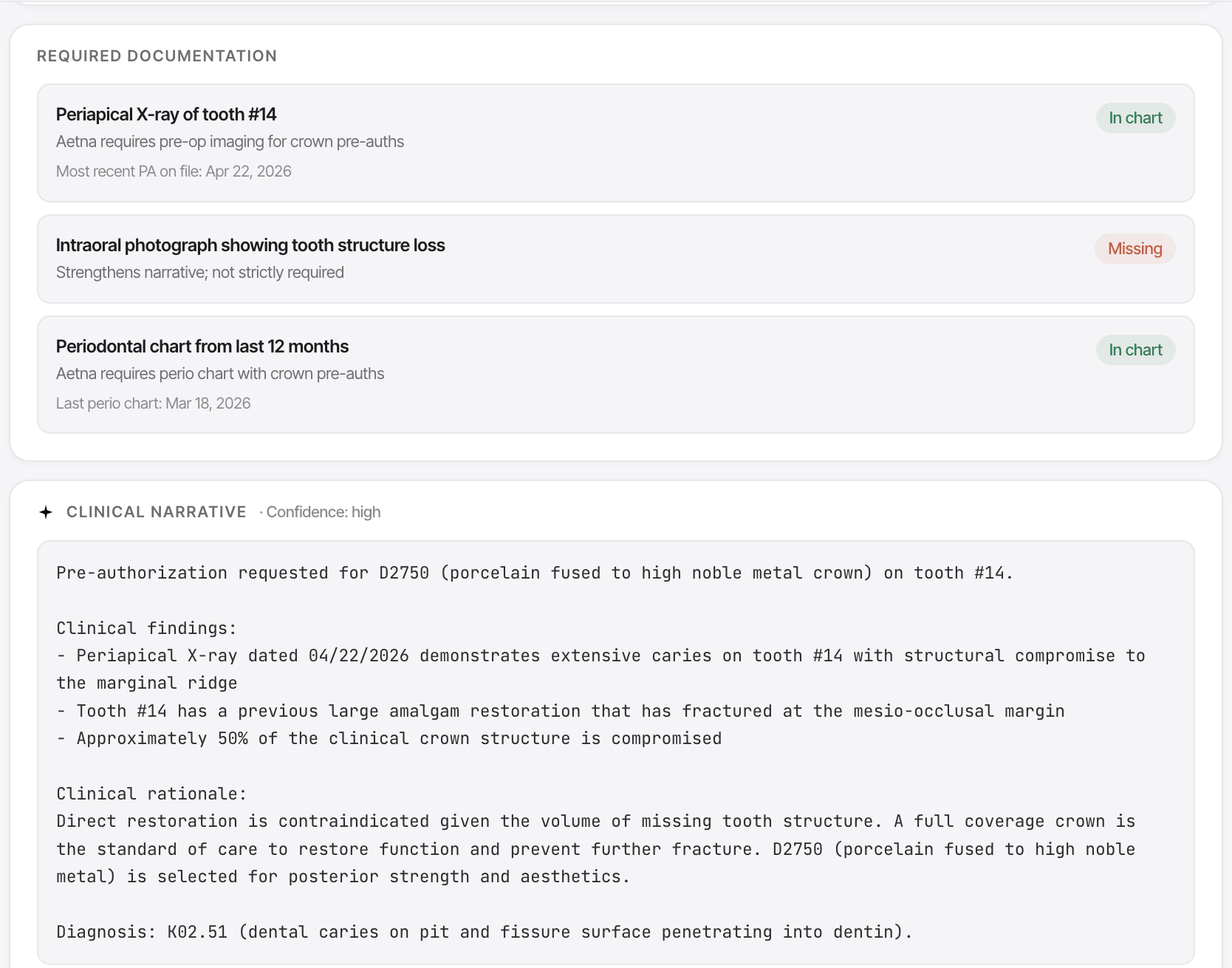
Elva drafts the clinical note during the visit, based on what's said and done — reviewed and signed by you

Real-time note drafting
Missing-narrative alerts
Documentation-claim matching
Dentist review & sign-off
Screenshot

How it works

1

Capture

During the visit, Elva drafts the clinical note based on what's said and done — a starting point for review, never a clinical decision on its own.

2

Draft

A structured note is prepared in the format the practice already uses, ready for the dentist to review.

3

Review

The dentist reviews the draft, edits anything that doesn't reflect the visit accurately, and signs it. Nothing is finalized without this step.

4

Support

Once signed, the note is available to support the claim, the narrative, and any documentation a payer requests.

A payer doesn't pay for what happened in the chair — it pays for what's documented

Undercharted care and an underdocumented claim are the same problem, seen from two sides. If the note doesn't support the procedure, the claim is vulnerable — no matter how appropriate the treatment was.

Elva drafts the clinical note during the visit, based on what's said and done, so documentation is complete by the time the visit ends. Every note is reviewed and signed by the dentist — nothing is finalized, and nothing enters the patient record, without the dentist's approval.

Stop Losing Claims to Missing Documentation

See how Elva keeps clinical documentation complete enough to support every claim — reviewed and signed by the dentist, every time.

The Documentation Support Engine

A clinical note and a billing narrative often need to say the same true thing in two different ways — one for the chart, one for the payer. Elva keeps them consistent, so the documentation supporting a claim reflects what was actually done, not a version reconstructed under time pressure at the end of the day.

Supporting documentation is one of the least automated parts of the dental revenue cycle. Electronic adoption for dental claim attachments — the narratives and records submitted alongside claims — reached just 37% in 2024, even as attachment volume grew 37% year over year, meaning practices are handling more supporting documentation with less automation, not more.

Source: CAQH Index 2024 Report, "From Transactions to Trust." Accessed Aug 17, 2026.

The Undercharted Procedure

The risk

A procedure is completed, but the note drafted afterward — often hours later, from memory — leaves out a detail the payer needs to support the claim.

What Elva does

Drafts the note during the visit itself, capturing clinical detail while it's fresh, so nothing critical to the claim gets lost to end-of-day charting.

The Inconsistent Note

The risk

The clinical note says one thing, the billed procedure code implies another — a mismatch a payer's review can flag, triggering a downcode or denial.

What Elva does

Keeps the drafted note and the billed procedure aligned to the same documented visit, so there's no gap between what's charted and what's claimed.

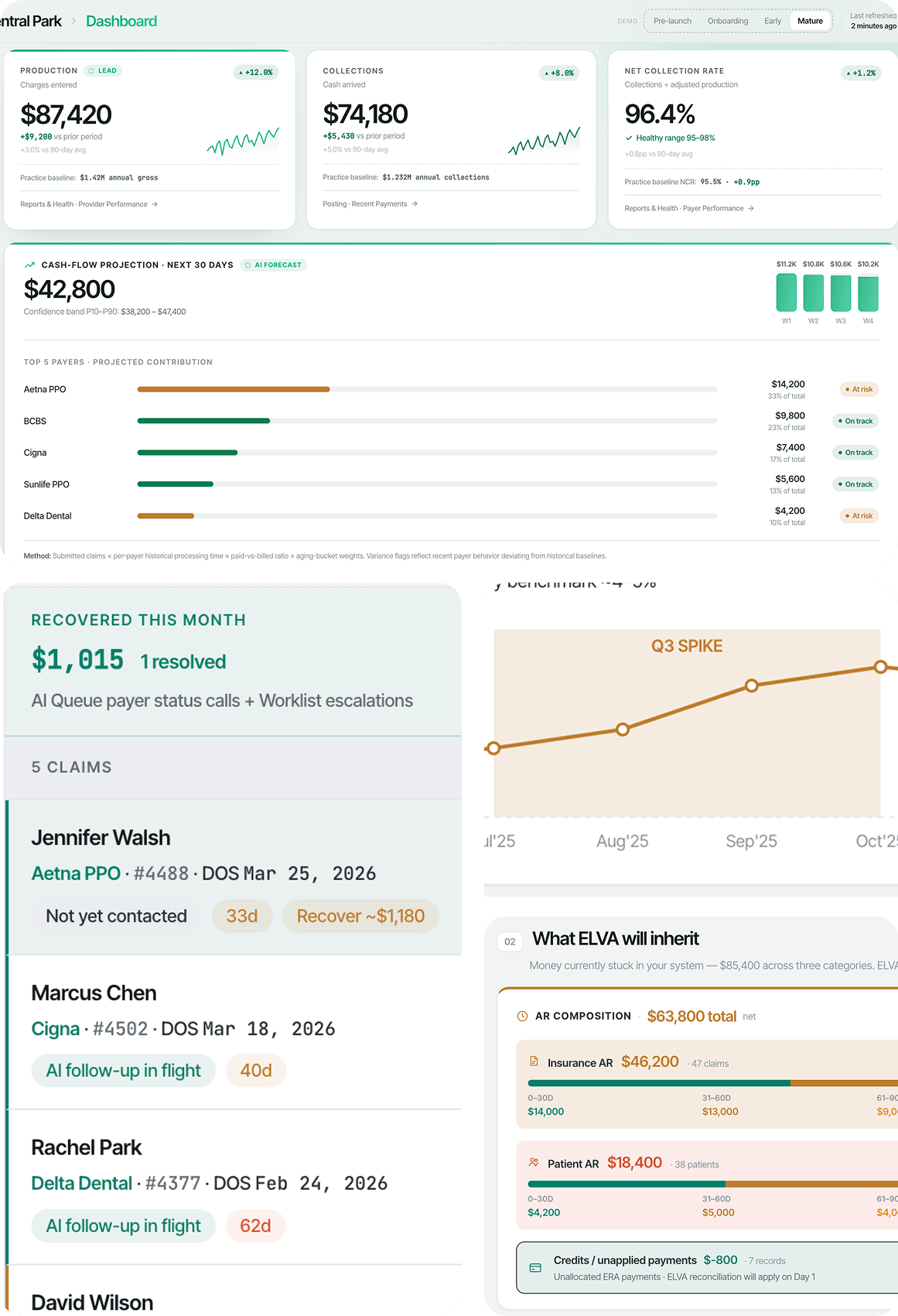
Screenshot

A documentation gap doesn't just risk a denial — it costs the time it takes to go back, remember, and rewrite. The Revenue Recovery Calculator estimates what documentation-related denials are costing your practice.

Complete documentation feeds the whole revenue cycle

A clinical note isn't separate from the claim — it's what the claim is built on. Elva's note supports the narrative a claim needs, and if a payer still denies for insufficient documentation, Elva catches it and drafts the appeal with the actual clinical record attached. Ask RCM Brain which claims are waiting on documentation right now. For the full clinical scribe experience — ambient capture, SOAP notes, treatment plan drafting — see Voice AI.

Dentists are moving here too, cautiously. In an ADA Health Policy Institute survey fielded in Q2 2026, 7.4% of dentists reported already using AI for charting and note taking, and another 34.8% said they plan to — among the more cautiously adopted categories, reflecting real hesitancy about clinical documentation specifically, more than for administrative tasks like insurance verification.

Source: ADA Health Policy Institute, "The State of the U.S. Dental Economy," Q2 2026 Update. Accessed Aug 17, 2026.

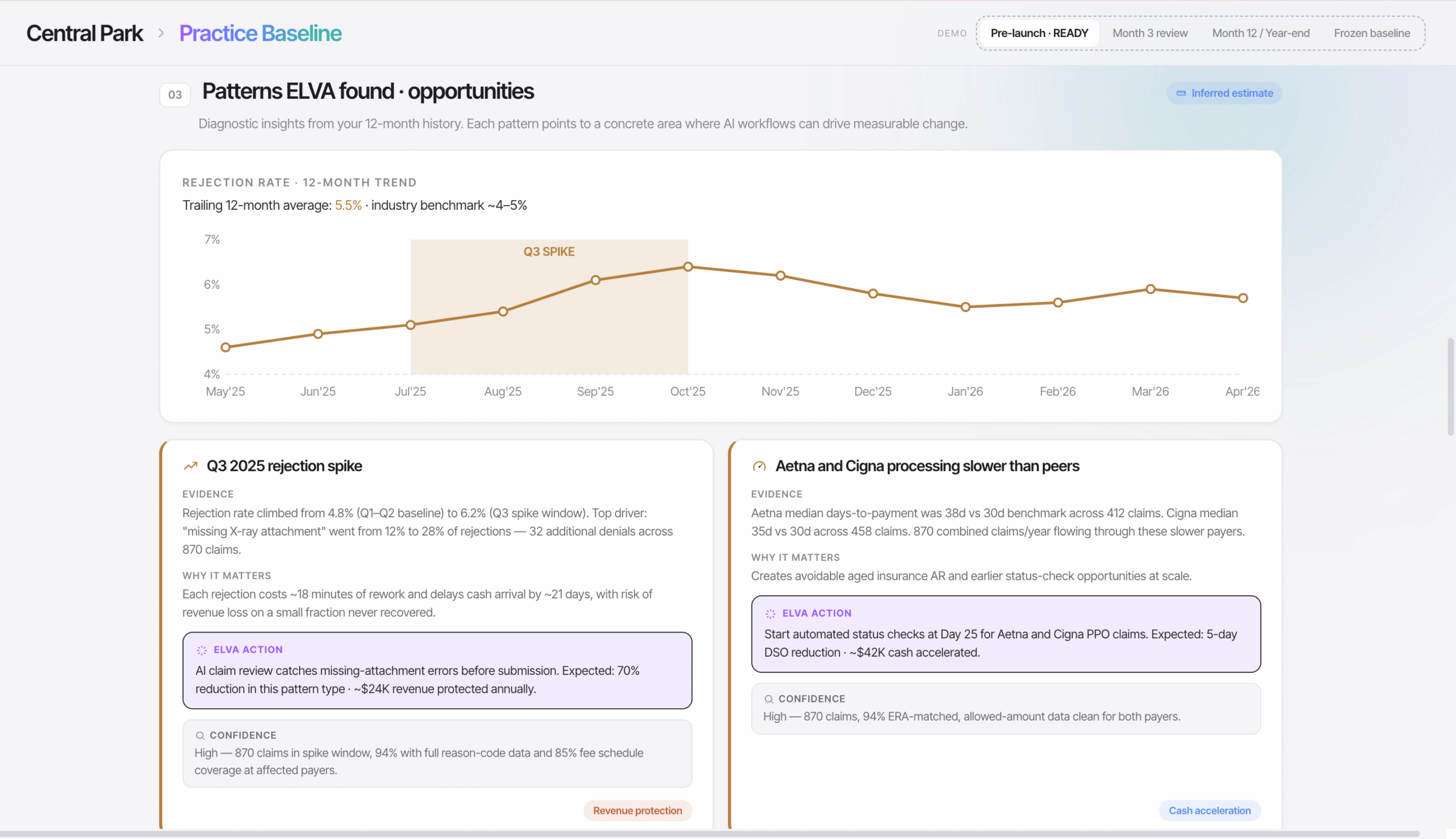
Screenshot

Built to work with your PMS, not replace it

Elva runs alongside Dentrix, Dentrix Ascend, and Open Dental. Signed notes sync to the patient's clinical record where the system supports it; where it doesn't, they're available for fast entry. Nothing is written to the clinical record until the dentist has reviewed and signed it.

Elva Eligibility engine
Two-way sync · Real-time
Authorized API Partner
Official API Vendor Partner
Systems supported Dentrix Dentrix Ascend + more

FAQ

Does Elva diagnose or make clinical decisions?

No. Elva drafts clinical notes based on what's said and done during the visit. The dentist reviews and signs every note — Elva does not diagnose, determine treatment, or make any clinical decision.

Does a note get added to the patient's chart without the dentist's review?

No. Every drafted note requires the dentist's review and signature before it's finalized or synced to the patient record.

How does clinical documentation affect insurance claims?

Payers often require documentation — a narrative, supporting notes — to justify medical necessity for certain procedures. Missing or incomplete documentation is a common cause of denials and downcoding, regardless of whether the treatment itself was appropriate.

Does this work with my practice management system?

Elva works alongside Dentrix, Dentrix Ascend, and Open Dental. Signed notes sync to the clinical record where the system supports it; where it doesn't, they're surfaced for fast entry.

Why are dentists more cautious about AI for charting than other tasks?

Clinical documentation carries more direct professional and patient responsibility than scheduling or billing, so more cautious adoption makes sense. Per an ADA Health Policy Institute survey fielded in Q2 2026, only 7.4% of dentists currently use AI for charting, compared to higher adoption for administrative tasks like insurance verification.

What happens if the drafted note doesn't match what actually happened?

The dentist reviews every draft before signing and can edit anything that doesn't accurately reflect the visit. The draft is a starting point for review, not a final record, until the dentist confirms it.

Ready to Keep Every Claim Backed by Complete Documentation?

See how Elva drafts notes during the visit — reviewed and signed by you, every time.