Dental Denials Management Software | Elva
ElvaAI Free Consultation
Elva AI
Free AI Readiness Consultation
InsuranceProactive Denials Management

Turn Denials Into Recovered Revenue, Not Write-Offs

Elva catches denials as they arrive, diagnoses the reason, and drafts the appeal — before the deadline closes

Denial-reason diagnosis
Downcode detection
Appeal drafting
Deadline tracking
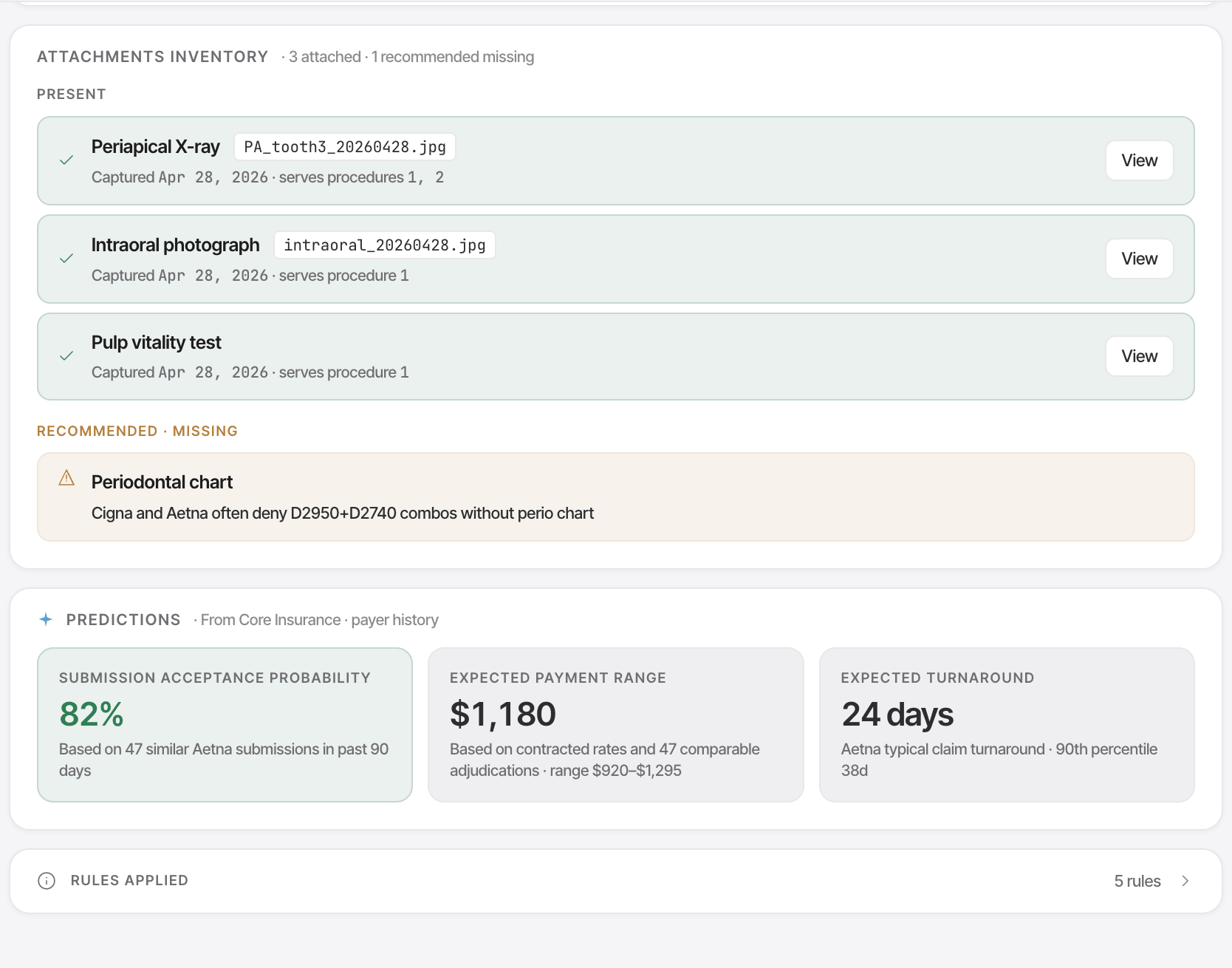
Screenshot

How it works

1

Catch

Elva flags denials as they come in from the payer, not weeks later during a manual review.

2

Diagnose

Cross-references the denial reason against the original claim and the plan's rules to identify exactly why it was denied.

3

Draft

Prepares the appeal with the supporting documentation and reasoning the payer needs, ready for review.

4

Track

Every appeal is tracked against its payer-specific deadline — these vary widely, from a matter of weeks to, in some cases, 180 days (Aetna Dental, for example, requires providers to appeal within 180 days of the adverse decision) — so nothing misses its window.

Caught when it arrives, not discovered in a spreadsheet three months later

A denial is only expensive if nobody appeals it in time. Most practices don't lose this revenue because the appeal wasn't winnable — they lose it because the denial sat in a stack until the payer's window closed.

A denial means a claim was fully processed and declined — different from a rejection, which happens before the payer ever reviews it. A denial can be appealed; once the deadline passes, it can't. Elva's job is to make sure that deadline never passes unnoticed.

Stop Letting Denials Become Write-Offs

See how Elva catches a denial, drafts the appeal, and tracks the deadline — before the window closes.

The Denial Recovery Engine

A denial isn't the end of the conversation with a payer — it's the start of one, with a clock attached. Elva reads the denial reason, checks it against what was actually billed and covered, and prepares the response before the clock runs out.

Some of the newest state reforms go directly at how denials get made in the first place. Indiana's 2026 law prohibits insurers from relying solely on automated systems when reducing reimbursement for medical necessity — a person must review the decision, with a written explanation and a real appeals process. It's the same principle Elva is built on, from the other side of the transaction: a system can flag and draft, but a person makes the final call. Oregon's 2026 law goes after timing directly, requiring payers to pay or deny a clean claim within 45 days.

Source: American Dental Association, "State dental insurance reforms continue momentum in 2026 legislative sessions." Accessed Aug 17, 2026.

The Downcode With No Explanation

The risk

A crown claim is downcoded to a lower-value procedure with a vague or missing explanation — and without pushing back, the practice simply accepts the lower payment.

What Elva does

Flags downcoded claims automatically, cross-references the original procedure against what was actually paid, and drafts an appeal citing the discrepancy.

The Missed Deadline

The risk

A denial arrives, gets set aside during a busy week, and by the time anyone circles back the payer's appeal window has already closed — the revenue is gone for good.

What Elva does

Tracks every denial against its specific payer's appeal deadline and surfaces anything approaching its window, before it's too late.

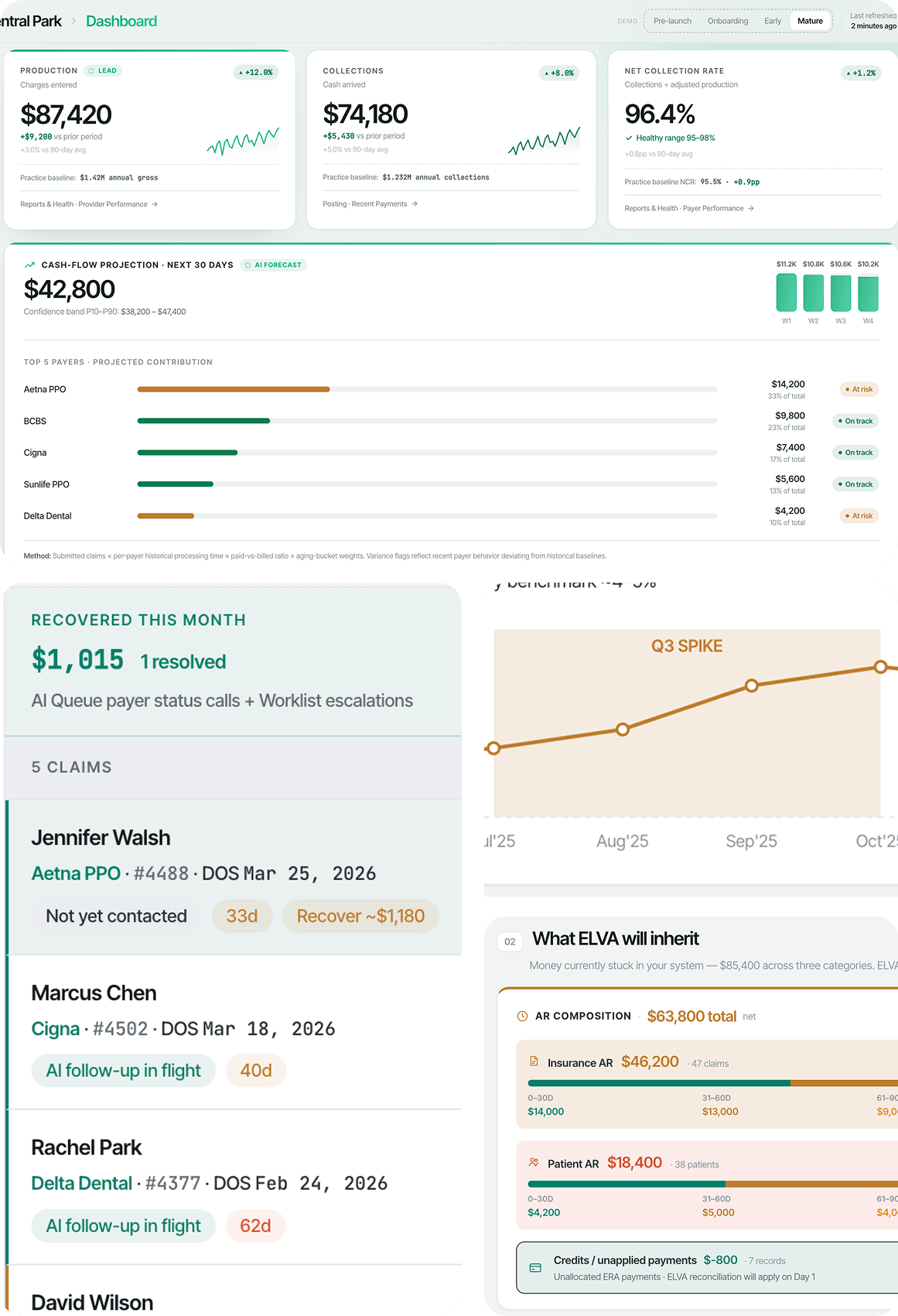
Screenshot

A denial that misses its appeal window doesn't stay a delay — it becomes a permanent write-off. The Revenue Recovery Calculator estimates what unappealed denials are costing your practice.

Denials management feeds the whole revenue cycle

A denial doesn't start with denials management — it starts with what got submitted. If eligibility was verified correctly and the claim went out clean, fewer denials happen in the first place. When one still comes through, Elva catches it here instead of letting it become aging AR. Ask RCM Brain which denials are approaching their appeal deadline right now.

This is a growing structural fight, not an isolated problem: more than 100 dental insurance reform bills were introduced across 37 states in the 2026 legislative session alone, with 16 states already enacting 30 new laws as of mid-2026 — building on the 37 laws passed in 18 states in 2025.

Source: American Dental Association, "State dental insurance reforms continue momentum in 2026 legislative sessions." Accessed Aug 17, 2026.

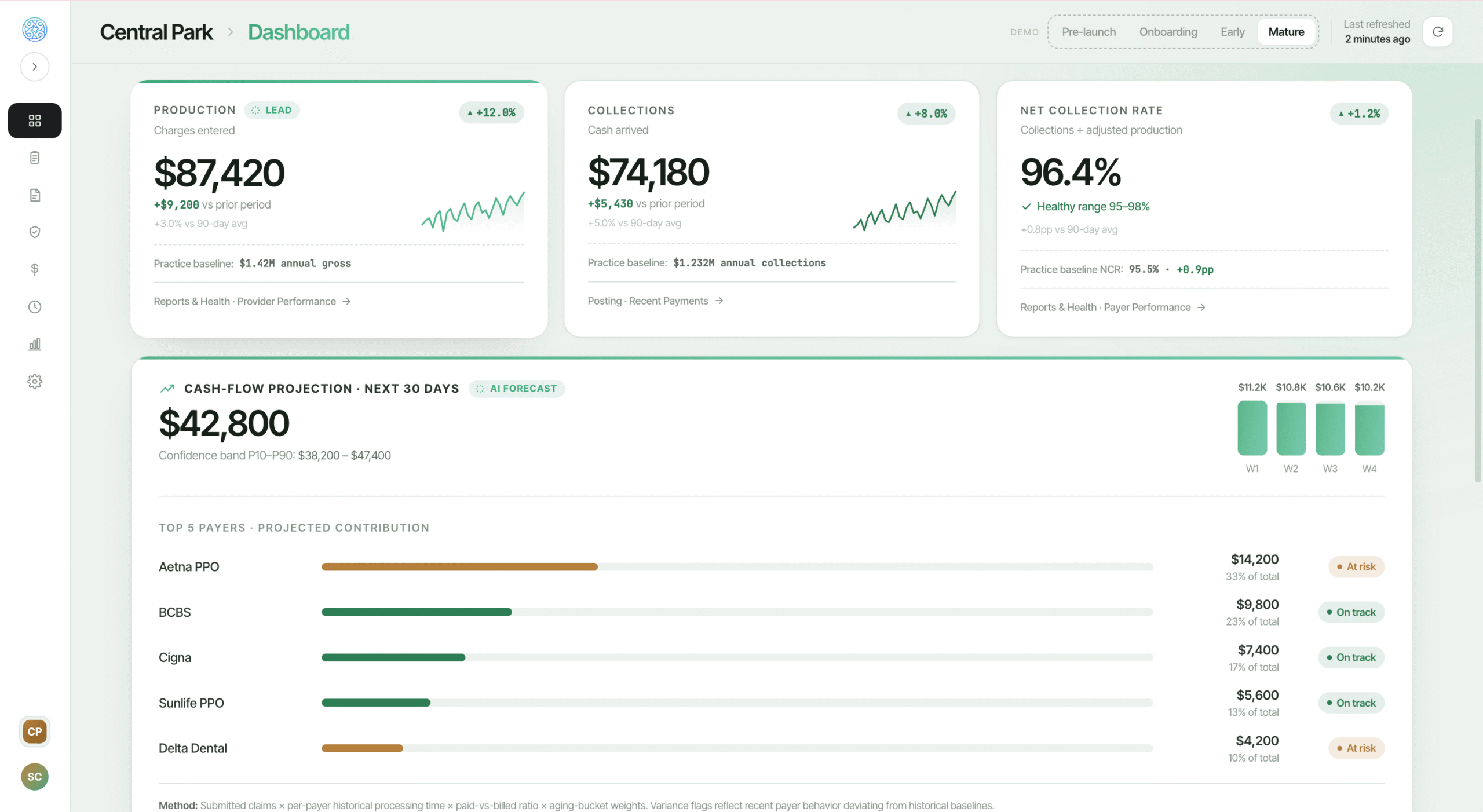
Screenshot

Built to work with your PMS, not replace it

Elva runs alongside Dentrix, Dentrix Ascend, and Open Dental. Where the system supports it, denial and appeal status sync to the claim record; where it doesn't, they're surfaced for fast entry.

Elva Eligibility engine
Two-way sync · Real-time
Authorized API Partner
Official API Vendor Partner
Systems supported Dentrix Dentrix Ascend + more

FAQ

What's the difference between a rejected claim and a denied claim?

A rejection happens before the payer processes the claim — usually a formatting issue caught at the clearinghouse. A denial means the claim was fully processed and declined, and it can be appealed within the payer's deadline.

Does Elva submit appeals automatically?

Yes — Elva can be configured to send appeals fully automatically, or to draft everything and wait for your team's review before it's sent. You choose the level of oversight that fits your practice.

How does Elva know when an appeal deadline is approaching?

Elva tracks each denial against its specific payer's published appeal window — these vary by payer, from a matter of weeks to, in some cases, 180 days — and flags anything approaching its deadline.

Does this work with my practice management system?

Elva works alongside Dentrix, Dentrix Ascend, and Open Dental. Where the system supports it, denial and appeal status sync to the claim record; where it doesn't, it's surfaced for fast entry.

Why is denials management becoming more important?

State-level reform is accelerating — more than 100 dental insurance reform bills were introduced across 37 states in the 2026 legislative session alone, many targeting downcoding and denial practices directly, per the American Dental Association.

What does Elva include in a denial appeal?

Elva drafts the appeal with the specific documentation and reasoning the payer requires — citing the original procedure, the payer's own rules, and any discrepancy between what was billed and what was paid — ready for your team to review before it's sent.

Ready to Stop Losing Denials to Deadlines?

See Elva catch a denial and draft the appeal before the window closes.