What is real-time dental insurance verification?
Real-time eligibility verification means a patient's coverage is checked before their visit, not discovered after a claim is submitted. Elva runs the check ahead of the appointment so the treatment estimate reflects what the plan actually covers.
Does Elva verify eligibility automatically, with no review?
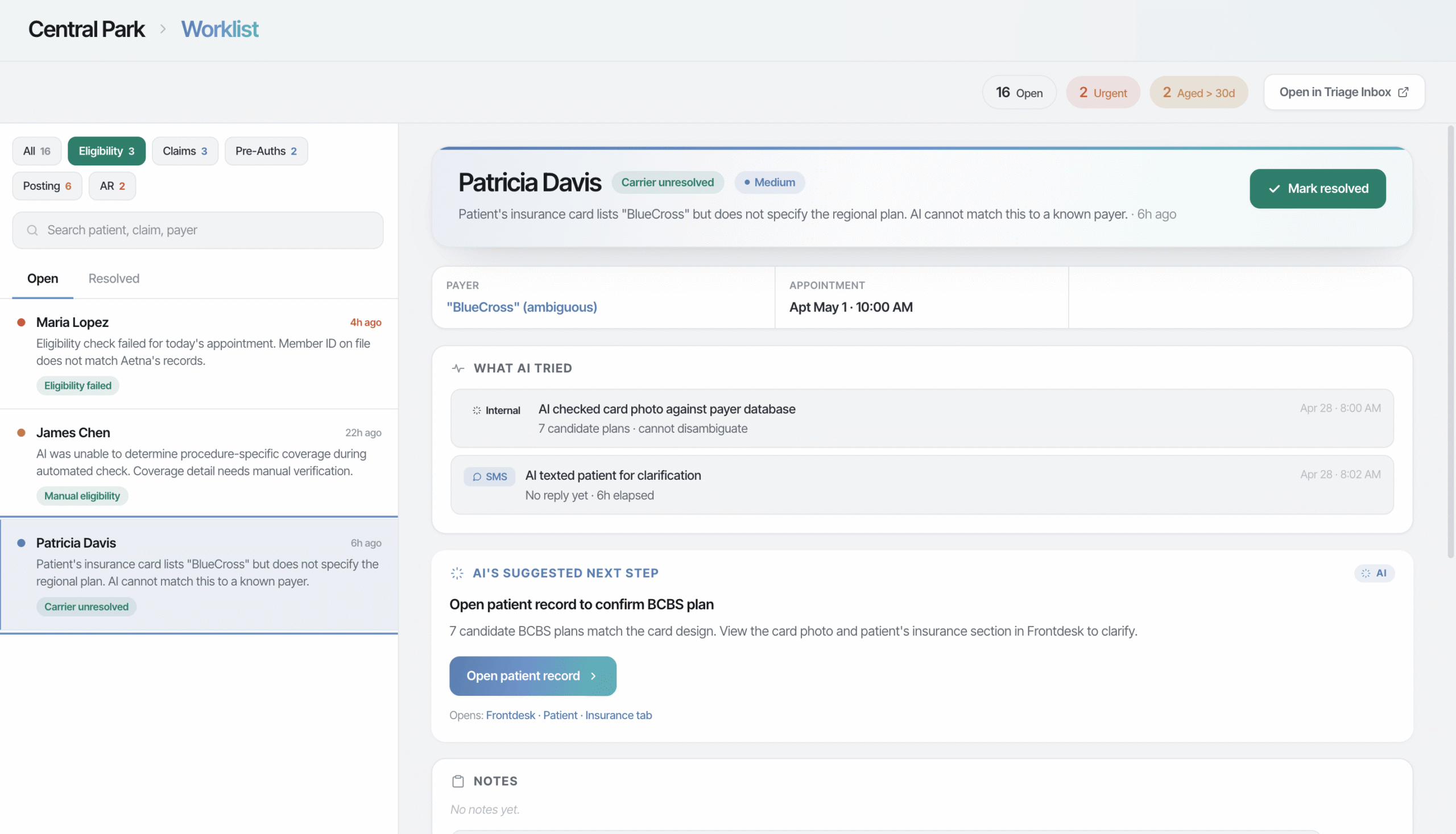
Elva runs the check and surfaces the results for your team — deductible, frequency limits, waiting periods — in plain language. It doesn't replace the front desk's judgment; it removes the portal logins and hold-music part of the job.
How is this different from a standalone eligibility checker?
A standalone tool gives you a coverage report and stops there. Elva's eligibility check is connected to the rest of the revenue cycle — what it finds feeds into claims, denials, and AR, instead of living in a separate system nobody checks twice.
Does this work with my practice management system?
Elva works alongside Dentrix, Dentrix Ascend, and Open Dental. Where the PMS supports direct posting, coverage data goes straight into the patient record; where it doesn't, it's surfaced for fast entry.
What specific plan details does Elva check?
Beyond active/inactive status, Elva checks the fine print that actually determines what gets paid — missing-tooth clauses, waiting periods, rolling-vs-calendar-year frequency limits, age limits, and downgrade or alternate-benefit clauses. These are the specific exclusions that turn an expected payment into a denial or a partial one.
Why does eligibility verification matter so much for a dental practice's bottom line?
Eligibility and benefits work is the single largest share of dental administrative spend, at 30% — the industry ran an estimated 1.2 billion eligibility and benefit verifications in 2023 alone. Most of the risk lives in the fine print, not the active/inactive check itself.