On this page
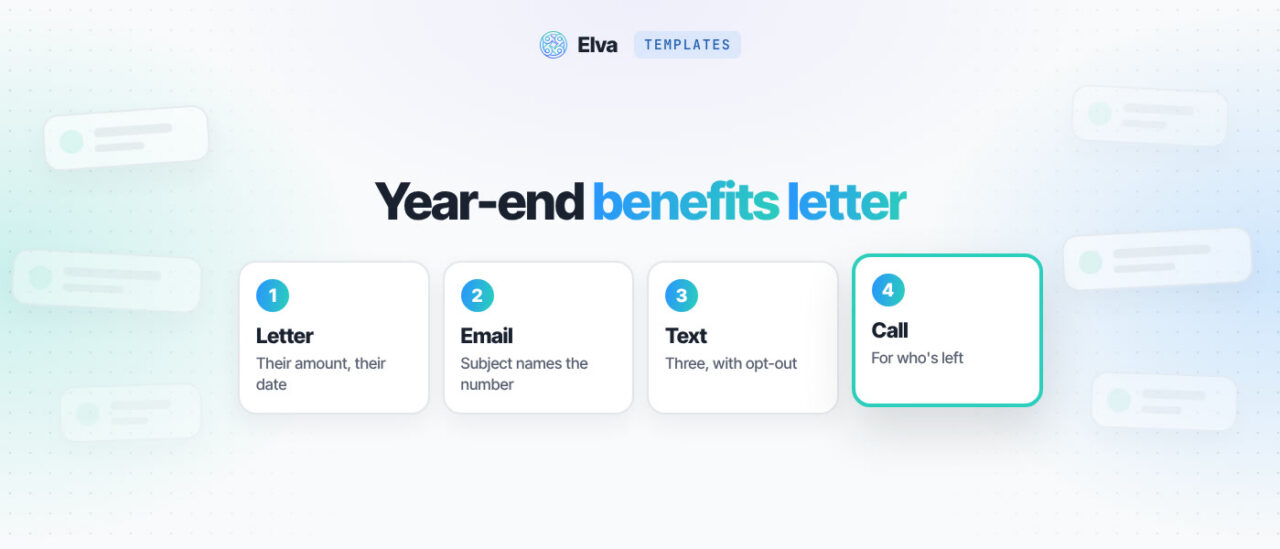
Quick answer: A year-end dental benefits letter tells a patient how much of their annual maximum is left, when it expires, and how to book before then. Name the real amount, give the date for that patient’s plan, and offer one way to book. Then follow up by text, email and phone, because one letter in November reaches few patients.
Few patients use their whole maximum. In 2024, only 2.9% of group dental PPO enrollees reached their annual maximum, according to the National Association of Dental Plans (NADP, 2025 report on 2024 plan data). So most of your insured patients have something left. The templates below are written to copy and adapt. Replace anything in [brackets].
What a year-end benefits letter should include
Every version, on paper, by email or by text, does the same five things.
- The patient’s own number. “You have $[amount] left” works better than “you may have benefits remaining.” A patient with $40 left and a patient with $1,400 left should not get the same letter.
- The right date. Most plans reset on January 1, but not all. Use each patient’s plan year, not a blanket “December 31.”
- A reason to come in. The cleaning or exam they’re due for, said plainly. Leave treatment details and prices out of texts and emails.
- One way to book. A phone number, a reply or a link. One is enough.
- An honest tone. Skip “use it or lose it” unless you know the plan doesn’t roll over.
That last point matters more than most templates admit. NADP’s 2025 report found that 42% of PPO enrollees are in plans with an annual maximum rollover, where part of the unused amount carries into the next year. A “use it or lose it” letter is simply wrong for those patients.
Before you send: three checks
- Pull the remaining amount per patient. Check what each plan has paid this year and what claims are still pending, so the number in the letter is current. A dental insurance breakdown shows the maximum, what’s been used and the plan year.
- Confirm the plan year. Calendar year, fiscal year or enrollment date. Patients on a non-calendar plan need a different date, or no year-end letter at all.
- Remove patients who are already booked. Nothing annoys a patient more than “book now” when their visit is on Tuesday. Leave out anyone who opted out of messages too.
Year-end dental benefits letter template
Use this for mail or as the body of a longer email. It names the amount and the date, and it stays accurate for plans that roll over.
Dear [Patient first name],
Our records show you have about $[remaining amount] left in your [plan year] dental benefits, and they reset on [reset date]. You’re also due for your [cleaning / exam / cleaning and exam].
If you’d like to use those benefits before they reset, call us at [practice phone] or book at [booking link]. Our December schedule fills quickly, so earlier dates are easier to get.
This amount is an estimate based on what your plan has paid this year. Your plan decides the final coverage, and we’re happy to check it with you.
Warm regards,
[Practice name] | [Phone] | [Address]
For a patient on a plan with rollover, swap the second paragraph for: “Your plan carries part of any unused amount into next year, but booking now still keeps you on schedule for your [cleaning / exam].”
Email template
Subject lines that name the number or the date get read. Pick one:
- “[Patient first name], you have $[amount] in dental benefits left”
- “Your dental benefits reset on [reset date]”
- “Time for your [cleaning], before your benefits reset”
Hi [Patient first name],
You have about $[remaining amount] left in your dental benefits, and they reset on [reset date]. You’re due for your [cleaning / exam], so now is a good time to come in.
[Book online] or call [practice phone]. If you already have a visit booked, you can ignore this email.
[Practice name]
Text message templates
Keep texts short, name the practice first and include an opt-out line. Send only to patients who agreed to receive texts from you.
First text (October or early November)
Hi [first name], it’s [practice name]. You have about $[amount] in dental benefits left this year, and you’re due for your cleaning. Reply YES and we’ll find you a time, or book here: [link]. Reply STOP to opt out.
Follow-up (about two weeks later, only to patients who haven’t booked)
Hi [first name], [practice name] here. Your dental benefits reset on [reset date]. We still have openings on [days]. Reply YES to grab one. Reply STOP to opt out.
Last call (early December)
[first name], last reminder from [practice name]: your benefits reset on [reset date] and December is filling up. Reply YES and we’ll book you. Reply STOP to opt out.
Phone script and voicemail
Use the call for patients who haven’t answered the texts or the email.
Live call: “Hi [first name], this is [staff first name] from [practice name]. I’m calling because you’re due for your [cleaning], and our records show you still have some dental benefits left this year before they reset on [reset date]. Would you like me to find you a time?”
Voicemail: “Hi, this is [staff first name] from [practice name] calling for [first name]. Please give us a call back at [practice phone] when you have a moment. Thanks!”
Keep the voicemail to your name and number. Benefit amounts and visit details belong in the conversation, not on an answering machine someone else might hear.
When to send each message
| When | Channel | Who gets it |
|---|---|---|
| Late October to early November | Letter or email, plus the first text | Patients with benefits left and no visit booked |
| Mid-November | Follow-up text | Patients who haven’t booked |
| Late November | Phone call | Patients who still haven’t booked |
| Early December | Last-call text | Patients who haven’t booked, if openings remain |
Start in the fall. Patients who act on a reminder in mid-December often find the schedule full, and the benefit is gone anyway. Stop contacting any patient as soon as they book, decline or reply STOP.
What to leave out
- “Use it or lose it” for every patient. It’s wrong for plans with rollover, and patients notice.
- Treatment details and prices in texts and voicemails. Keep them for a private conversation.
- Coverage promises. Say “about $[amount]” and “estimate”. The plan makes the final call.
- Discounts tied to insurance. Check your payer contracts before you offer anything off the patient portion.
Doing it by hand vs. automating it
By hand, the year-end letter is a project: pull a list, check each plan, write the letters, send them in November, then find time to follow up while the schedule is at its busiest. Most practices send one round and stop.
Elva runs the same job as unused dental benefits reminders. In the months before benefits reset, it tells each patient how much they have left and when it expires, by text, email and phone, and books them when they reply. Patients who already have a visit, opted out or can’t be reached are left out, and anyone who books stops receiving messages. Patients still unbooked reach your team’s call list with who to call and what they were already sent. Nothing is sent until you press Start.
Year-end benefits are one kind of recall. Patients due for a cleaning are covered by hygiene recall, and for wording on visits that are already booked, see our dental appointment reminder templates.
FAQ
What should a year-end dental benefits letter say?
It should tell the patient how much of their annual maximum is left, the date their benefits reset, what they’re due for, and one way to book. Use each patient’s own amount and plan year rather than a generic “use it or lose it” warning.
When should I send end-of-year dental benefit reminders?
Start in late October or early November, then follow up by text, email and phone through early December. Patients who wait for a mid-December reminder often find the schedule already full.
Do all dental benefits expire on December 31?
No. Most plans reset on January 1, but some run on a fiscal or enrollment-date year. NADP’s 2025 report found that 42% of PPO enrollees are in plans that roll part of an unused maximum into the next year.
Can I text patients about unused dental benefits?
Yes, if the patient agreed to receive texts from your practice. Name the practice first, keep treatment details and prices out of the text, and include “Reply STOP to opt out.”
Should the letter include the patient’s remaining amount?
Yes. A specific number is harder to ignore than a general warning. Call it an estimate, since the plan decides final coverage, and check it against pending claims before you send.