Strip a DSO down to its financial premise and you get one idea: operational leverage. Grow revenue and locations faster than you grow the cost of running them. That spread — between how fast the top line scales and how slowly the overhead scales — is the entire investment thesis, and in a private-equity-backed group it’s the thing the sponsor is underwriting. So the real question for any operator is how to grow a dental group without growing overhead in lockstep — because traditionally, that’s exactly what happens.
Every new practice needs more front-desk staff, more billing capacity, more management attention. Knowledge has to be rebuilt at each location and again with every hire. Each acquisition adds administrative weight. So the margin expansion the model promises gets eaten, location by location, by the headcount required to run each one. The leverage is real in the pitch and elusive in the operations. This is the meta-problem the rest of this series has been circling: each pain we covered is, underneath, a line of cost that grows with the group.
Where the leverage actually comes from
The Brain doesn’t produce leverage through one feature. It produces it by removing, at the architectural level, the specific costs that have always scaled with location count. It’s worth seeing them as a stack, because each maps to a piece of this series.
It removes a large share of the per-location labor cost. Through Supervised Autonomy, ELVA autonomously handles the routine, rule-governed majority of administrative work, escalating only what needs human judgment. That majority is high because dentistry is rule-dense — and, framed honestly, it’s already substantial and improving over time toward full autopilot as the AI matures. The practical consequence: a location’s administrative volume no longer translates one-to-one into administrative headcount.
It removes the per-hire ramp cost and the knowledge-rebuild cost. Because each practice’s operating knowledge lives in the Brain rather than only in its staff (the knowledge-loss problem), a new hire can be productive on day one by asking the Brain instead of spending months learning the practice — and that knowledge doesn’t evaporate when someone leaves. The recurring onboarding tax that scales with every hire at every location is structurally reduced.
It removes much of the per-location management cost. Through the Three Minds governance layer, corporate standards are enforced by the system across every location rather than by managers chasing consistency by hand — while still honoring the autonomy you’ve promised specific practices. Standardization the system applies is cheaper to run than standardization people have to police.
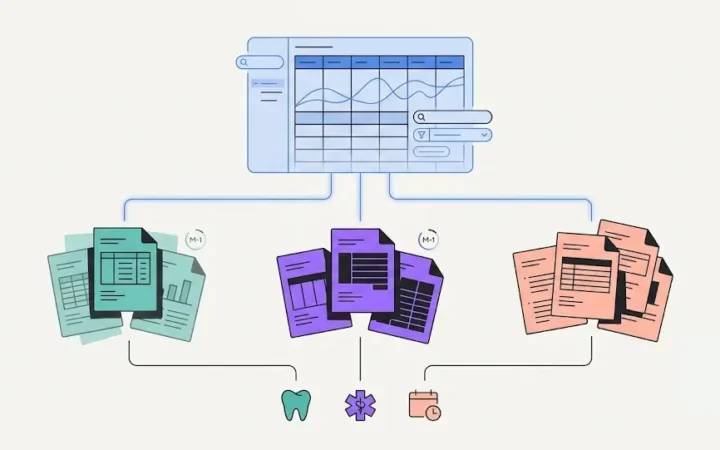
And it lets you see and steer the whole group without a proportional management layer, because the portfolio is queryable in one place across a mixed-PMS group rather than assembled by hand, location by location, month after month.
Under the hood — leverage is an architectural property. None of the above is a productivity tip; each is a direct consequence of the Brain’s design. Autonomy handles volume without headcount. The knowledge engine removes the per-location knowledge and ramp cost. The governance layer removes the per-location management cost. Total Context removes the cost of assembling visibility. The architecture is what bends the overhead curve — which is why the effect compounds as you add locations, instead of resetting at each one.
The number the model turns on
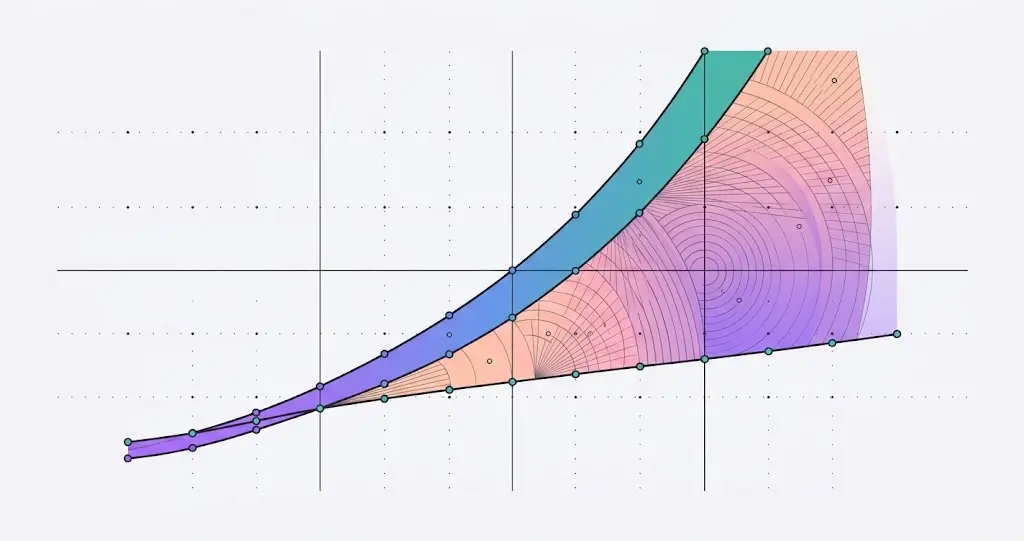
Put those together and you get the thing the thesis depends on: you can add locations without adding overhead in proportion. The same group can run more locations, handle more administrative volume per location, ramp new staff faster, and standardize operations — without the linear growth in admin, billing, and management headcount that has historically eaten the margin. That’s operational leverage stated precisely: not “AI makes you more efficient” in the abstract, but a structural change in how the cost of running a practice scales as you grow the number of practices. For a sponsor underwriting margin expansion across a roll-up, that curve — overhead growing slower than locations — is the whole investment.
It’s worth being disciplined about the claim. The leverage is real and architectural, but it’s not a fixed percentage we’d put on a slide and ask you to hold us to. The honest framing is the true one: the Brain handles the routine majority of the work today, that share is climbing toward full autopilot, and the costs it removes are exactly the ones that have always scaled with location count. How much that’s worth in your group depends on your group — and it’s a number worth modeling against your actual operations, not accepting from a vendor.
Why the Brain, and not a feature
This is the clearest answer to a question worth asking directly: why does ELVA talk about a Brain rather than just selling a receptionist, or a scheduler, or a billing tool? Because a single feature helps a single location with a single task. It doesn’t change how the cost of the group scales. The Brain does — precisely because it’s the layer underneath all the features: where the practice’s knowledge lives, where the rules are governed, where autonomy is bounded, and where the whole group becomes visible and consistent. The features are organs. The Brain is the system that makes them add up to leverage instead of just adding up to tools.
That’s the case for the ELVA Brain in a DSO. Knowledge that survives turnover. Standards enforced without erasing local autonomy — and that travel to any new acquisition regardless of its PMS. A group you can actually see. An AI you can defend to your board. And, running through all of it, the operational leverage the model was built to capture — delivered by the architecture, not promised by the marketing.
This closes the seven structural problems series. The foundation underneath all of it: the architecture of the Practice Brain and how it learns your practice. See it in product form as ELVA for DSOs and group practices.
Frequently Asked Questions
How do you grow a dental group without growing overhead?
By removing the costs that have always scaled with location count, at the architectural level: per-location labor (via autonomy that handles routine work), per-hire ramp and knowledge-rebuild cost (knowledge lives in the system, not just people), per-location management cost (standards enforced by the system), and the cost of assembling visibility (one queryable view). The overhead curve bends instead of resetting at each location.
What is operational leverage in a DSO?
It’s the spread between how fast revenue and locations scale and how slowly the cost of running them scales — the core DSO investment thesis. Traditionally overhead scales almost as fast as locations, eating the margin; the goal is to grow locations without adding overhead in proportion.
Why doesn’t a single feature deliver this leverage?
Because a single feature helps one location with one task — it doesn’t change how the cost of the group scales. Leverage comes from the layer underneath the features, where knowledge lives, rules are governed, autonomy is bounded, and the group is visible and consistent. That’s why ELVA is a Brain, not a point tool.
Can ELVA promise a specific margin improvement?
No — and that’s the honest framing. The leverage is real and architectural, but not a fixed percentage to put on a slide. ELVA handles the routine majority of the work today, that share climbs toward full autopilot, and the costs removed are exactly the ones that scale with location count. How much that’s worth depends on your group and is worth modeling against your actual operations.
How does this connect to the other DSO problems?
Each prior problem — knowledge loss, variance, the autonomy fight, multi-PMS integration, visibility, board defensibility — is underneath a cost that grows with the group. Margin leverage is the meta-problem they all roll up into, and the Brain addresses it by removing those costs at the architectural level rather than one feature at a time.
Model the leverage against your own group. Start with the architecture of the Practice Brain, or explore ELVA for DSOs and group practices.