On this page
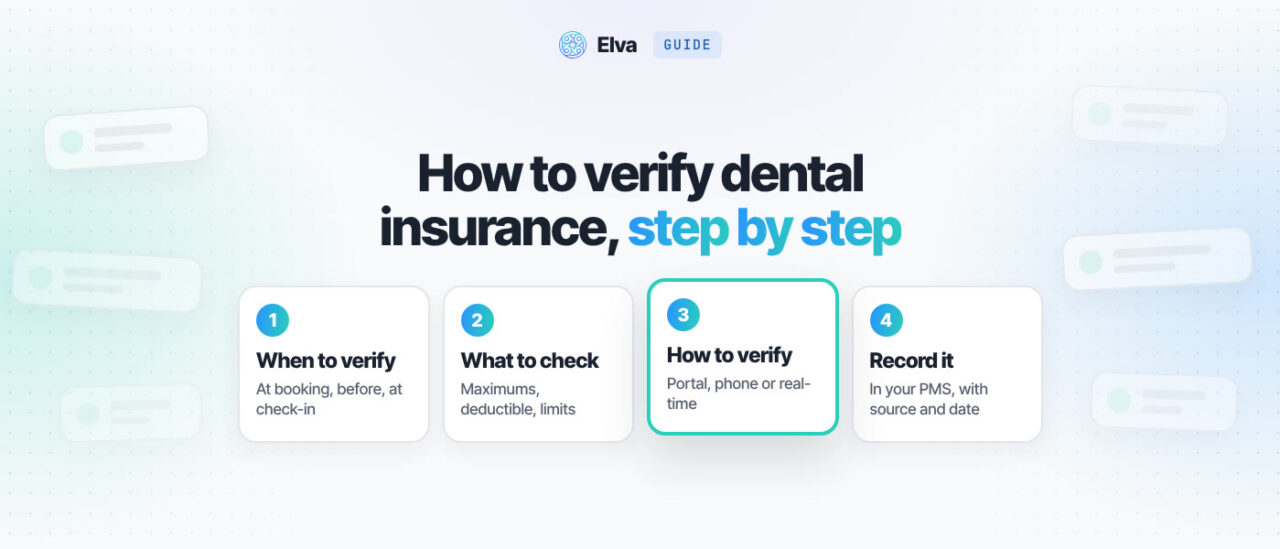
Quick answer: To verify dental insurance, collect the subscriber’s details when the visit is booked, check active coverage and the benefits that matter for the planned treatment through the payer’s portal, a phone call or an electronic eligibility check, then record what you found, where it came from and the date in the patient’s record in your practice management system (PMS). Re-check close to the visit, because coverage can change between booking and the appointment.
Verification is one of the biggest paperwork costs in a dental office. Dental spending on eligibility and benefit verification rose 15% to $2.1 billion in 2023, the largest increase of any administrative task the 2024 CAQH Index measured for dentistry (ADA News, March 2025).
This guide is the manual process: when to verify, what to check, which of the three ways to use, what to ask a payer rep and how to record the answer.
Key findings
- Dental eligibility and benefit verification cost the industry $2.1 billion in 2023, up 15% (CAQH (now DataSpring), 2024 CAQH Index, via ADA News).
- CAQH puts the time-savings opportunity at 8 minutes for each dental eligibility and benefit verification that moves to a fully electronic check (2024 CAQH Index).
- “Active” is only the first answer. Frequency limits, waiting periods, missing tooth clauses and downgrades decide what the patient owes, and an electronic check doesn’t always return them.
- A verification you can’t trace (no source, no date, no rep name or reference number) is hard to defend when a claim comes back different.
What does eligibility verification mean?
Eligibility verification confirms that a patient’s dental plan is active on the date of service, under the right subscriber and plan; benefits verification then finds out what that plan pays for the treatment you have planned. Most offices do both in one pass and call it insurance verification. The first answer is yes or no. The second is a list of numbers and rules, and it’s where most surprises on the patient’s bill come from.
When should you verify dental insurance?
Verify at three points: when the appointment is booked, a few business days before the visit, and briefly at check-in.
- At booking. Collect the patient’s name and date of birth, the subscriber’s name and date of birth, the subscriber ID, group number, carrier and the carrier’s claims address or payer ID. Ask whether the patient has a second plan. If you can, run the eligibility check while the patient is still on the phone.
- A few business days before the visit. Run the full benefits check for the treatment on the schedule. Doing it early leaves time to call the payer when the portal or the electronic check doesn’t answer a question.
- At check-in. Ask one question: “Has anything changed with your insurance or your job?” A new employer often means a new plan. If the answer is yes, verify again before treatment.
Re-verify for every visit, not once a year. Plans change at the start of a benefit year, when someone changes jobs and when a family adds or drops a dependent.
What to check: the dental insurance verification checklist
Check these items for every insured visit. The first five tell you whether the plan will pay at all; the rest tell you how much.
- Eligibility dates: the plan is active on the date of service, with the effective date and, if there is one, the termination date.
- Subscriber and relationship: the patient is covered under this subscriber, and the relationship (self, spouse, child) matches your record.
- Plan type and network: PPO, HMO/DHMO, indemnity or Medicaid, and whether your office is in network for this plan.
- Annual maximum and remaining: the yearly maximum and how much is left this benefit year.
- Deductible and how much is met: individual and family deductible, the amount met so far, and which categories it applies to (some plans waive it for preventive care).
- Coverage % by category: preventive, basic and major, plus any separate percentage for the procedures you’ve planned.
- Frequency limits: how often the plan pays for cleanings, exams, bitewings, full-mouth X-rays and fluoride, and the date each was last paid.
- Waiting periods: whether basic or major services have a waiting period, and when it ends for this patient.
- Missing tooth clause: whether the plan excludes replacing a tooth that was missing before coverage started.
- Downgrades and alternate benefits: whether the plan pays a white filling or crown at the rate of a cheaper option, which leaves the difference to the patient.
- Service history: recent paid procedures, including work done at another office, that would trip a frequency limit.
- Coordination of benefits: whether there is a secondary plan, which plan is primary, and the secondary plan’s rules.
- Age limits and pre-authorization: age cutoffs (often on fluoride, sealants and orthodontics) and whether the planned treatment needs a pre-authorization.
For larger treatment plans you may need more than this. Our dental insurance breakdown lists 17 fields, with what goes wrong when each one is missing.
The three ways to verify insurance eligibility and benefits
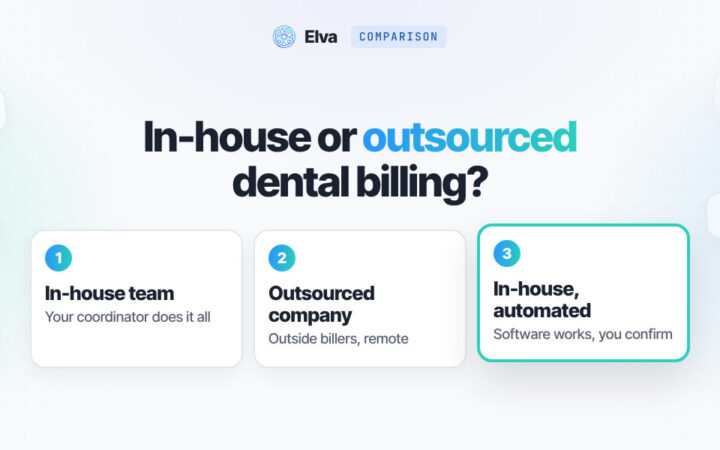
There are three ways to verify: the payer’s portal, a phone call to the payer, and an electronic check through a clearinghouse or a real-time eligibility service. ADA News describes the same three channels: a fully electronic, HIPAA-mandated transaction, a plan portal, or a manual check by phone, fax, email or mail (ADA News, March 2025).
| Method | What you get | Strengths | Trade-offs | Use it when |
|---|---|---|---|---|
| Payer portal | The plan summary, maximums, deductibles and often history and clauses, on the payer’s own site | Free; often the most detail without a call; you can print or save the page | One login per payer; every portal is laid out differently; some fields are missing or out of date | You need benefit detail for one patient and the payer’s portal is good |
| Phone call to the payer | Answers to your exact questions from a rep, or from the payer’s automated phone line | Covers what the portal and the electronic check leave out; you can ask about a specific procedure | Hold times; answers depend on the rep; you must write down the rep’s name and a reference number | The portal is unclear, the plan is unusual, or a large treatment plan depends on one rule |
| Clearinghouse or real-time eligibility check | An electronic answer (the HIPAA eligibility transaction) in seconds, often run from your software | Fast; checks many patients at once; easy to repeat the day before the visit | Often confirms active coverage but returns little dental detail, such as frequencies, history or clauses | Every patient, as the first pass, before you decide whether a portal or a call is needed |
Most offices end up using all three: the electronic check for everyone, the portal for detail, and a call for whatever is still unknown. What matters is that each answer in the record says which of the three it came from.
Payer call script for insurance verification
Use this when you call a payer’s provider line. Have the patient’s and subscriber’s details, your office’s tax ID and NPI, and the planned procedures in front of you.
Opening
“Hi, this is your name calling from practice name. Our tax ID is number and our NPI is number. I’m calling to verify eligibility and benefits for a patient.”
Identify the patient
“The subscriber is name, date of birth date, member ID number, group number. The patient is name, date of birth date, and they are the subscriber’s self / spouse / child.”
Eligibility
- “Is the patient’s coverage active today? What’s the effective date, and is there a termination date?”
- “Are we in network for this plan?”
- “Does the patient have other dental coverage on file, and which plan is primary?”
Money
- “What is the annual maximum, and how much is remaining for this benefit year? When does the benefit year reset?”
- “What is the deductible, how much has been met, and does it apply to preventive, basic and major services?”
- “What percentage does the plan pay for preventive, basic and major services?”
Rules for the planned treatment
- “We’re planning procedures. Are any of them subject to a waiting period, and has it been met?”
- “What are the frequency limits for cleanings, exams, bitewings and full-mouth X-rays, and when was each last paid?”
- “Is there a missing tooth clause? Does the plan downgrade posterior white fillings or crowns to a cheaper option?”
- “Are there age limits on fluoride or sealants, and does any of the planned treatment need a pre-authorization?”
Close the call
“Can I get your name and a reference number for this call?”
Write down the rep’s name, the reference number, the date and time, and the number you called. If an answer was unclear, write down exactly what the rep said, not what you think they meant.
How to record the verification in your PMS
Record each verification in the patient’s insurance and benefits screens in your PMS, plus a dated note that says where each answer came from. The next person who opens the chart, or the biller working a denial, should be able to see what was checked without asking you.
- Update the plan fields. Carrier, subscriber, member ID, group number, plan type and the coverage percentages by category.
- Update the running numbers. Remaining annual maximum and deductible met, as of today’s date.
- Record frequency history. The last paid date for each limited procedure, so the schedule can warn before a visit the plan won’t pay for.
- Add a verification note. Date, method (portal, phone or electronic check), and for calls the rep’s name and reference number. List anything the payer could not confirm as “not confirmed” instead of leaving it blank.
- Flag what affects the visit. A waiting period, a missing tooth clause or a downgrade for the planned treatment goes where the front desk will see it before the patient arrives.
- Tell the patient. If the check changes what the patient is likely to pay, say so before the visit, in writing where you can.
This is also where patient insurance verification turns into better answers at the desk: when the record is complete, the team can answer front desk insurance questions from what’s on screen instead of guessing.
Common mistakes that lead to denials and surprise bills
- Stopping at “active.” An active plan can still pay nothing for a cleaning that broke a frequency limit or a crown inside a waiting period.
- Verifying once and reusing the result. A check from the last visit says nothing about a job change last month.
- Missing the second plan. If the patient has two plans and you bill the wrong one first, the claim can come back.
- No source on the note. “Verified, 80% basic” with no date, method or reference number is hard to stand behind when the payer answers differently.
- Leaving blanks. A blank field reads as “fine” to the next person. Write “not confirmed” and say what’s needed to confirm it.
When to automate dental insurance verification
Doing every step by hand takes a lot of staff time, and CAQH puts the time-savings opportunity at 8 minutes per dental verification that moves to a fully electronic check (2024 CAQH Index). Software helps most when it does more than the electronic check: it should fill in the dental detail too and write the results back to your PMS.
Elva’s dental insurance eligibility verification software runs the check at booking and again before the visit. It looks at eligibility status, plan type and network, annual maximum, deductible, coverage percentages, frequency limits, service history, waiting periods, age limits, downgrades, missing tooth clauses and coordination of benefits, and syncs the results into the patient’s record in the PMS. When the electronic answer isn’t enough, Elva can place outbound calls to payers, and anything it can’t confirm is marked “Not yet known” instead of guessed.
Elva works with major PMSs, including Dentrix, Dentrix Ascend, Open Dental, Eaglesoft, Curve Dental, Denticon and CareStack. Don’t see your PMS? Contact us. Elva is HIPAA compliant and signs a business associate agreement (BAA) with every practice.
If you’re comparing tools, our guide to the best dental insurance verification software compares 15 options on what they actually verify. Verification is also the first step of dental revenue cycle management: a clean check before the visit is what makes a clean claim after it.
See tomorrow’s schedule verified: book a demo
Frequently asked questions
How to verify dental insurance eligibility and benefits?
Collect the subscriber’s details at booking, then check active coverage and the benefits for the planned treatment through the payer’s portal, a phone call or an electronic eligibility check. Record each answer in the PMS with its source and date, and re-check a few days before the visit and at check-in.
What does eligibility verification mean?
Eligibility verification confirms that a patient’s dental plan is active on the date of service, under the right subscriber and plan. Benefits verification goes further and finds out what the plan pays: maximums, deductibles, coverage percentages, frequency limits, waiting periods and clauses.
How far in advance should a dental office verify insurance?
Check eligibility at booking, run the full benefits check a few business days before the visit so there’s time to call the payer if needed, and ask at check-in whether anything has changed. Verify for every visit, not once a year.
What should you ask a payer rep on a verification call?
Ask whether coverage is active and in network, the annual maximum and what’s left, the deductible and how much is met, coverage percentages by category, frequency limits with last paid dates, waiting periods, missing tooth and downgrade clauses, and whether there’s other coverage. End by asking for the rep’s name and a reference number.
Is a verification of benefits a guarantee of payment?
No. A verification shows what the plan says on the day you check. The claim is judged later, against the plan’s rules and the patient’s history on the date of service, which is why the source and date of every answer belong in the record.
Sources
- ADA News, “Benefit verification drives increased administrative spending in dental offices,” Mary Beth Versaci, March 24, 2025. Retrieved 22 Nov 2026.
- CAQH, 2024 CAQH Index (2023 data), Eligibility and Benefit Verification, dental time-savings opportunity per transaction. Retrieved 22 Nov 2026. CAQH is now DataSpring.