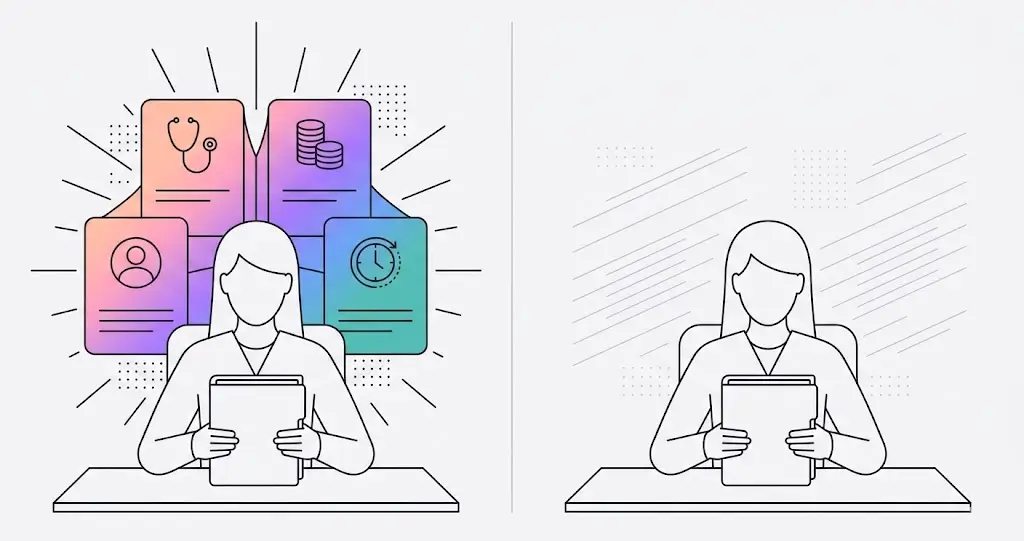
Watch your strongest treatment coordinator before a big case conversation and you won’t see them rehearsing closing lines. You’ll see them doing homework: what exactly was recommended, what it costs, what this patient’s plan is likely to cover, why the doctor says it matters clinically, and what — knowing this patient — is probably the real hesitation. By the time they sit down, they’re not selling. They’re the most informed person in the room, and it shows. That’s what good treatment plan presentation actually is: preparation wearing a calm voice.
Now watch a newer coordinator with the same case. Same practice, same fees, same doctor — but the homework didn’t happen, because homework takes time and experience nobody had that morning. The patient hears “let me check on that,” senses the uncertainty, and protects themselves with “I’ll think about it.” The case didn’t lose on merits. It lost on preparation.
What ELVA Prepares Before Every Treatment Plan Presentation
ELVA does the homework automatically. Before any case discussion, it assembles the complete picture the veteran would have built by hand:
- The recommendation, in full — what the doctor proposed and the clinical reason each item matters.
- The money, honestly — the fees, what insurance is expected to cover, and the patient’s likely out-of-pocket, dental treatment cost estimates, computed rather than guessed.
- The patient’s situation — pulled from their unified patient profile, the factual signals relevant to this case and this person, so the conversation starts where the patient actually is.
- The stakes of waiting — an honest, plain-language picture of the cost of delaying dental treatment, ready if the patient asks “can it wait?”
It’s memory, preparation, and synthesis — done in seconds instead of stolen minutes, for every case, not just the ones someone had time for.
Treatment Plan Presentation With Facts, Never Sales Scripts
Here’s the design decision that matters most, and it’s deliberate: ELVA prepares facts with evidence; it never coaches manipulation. It tells the team what’s true about this patient and this plan — it does not generate persuasion tactics, objection-handling scripts, or psychological angles.
That’s an ethical line, and it’s also the more effective strategy. Patients accept treatment from teams that sound informed and trustworthy; they retreat from teams that sound rehearsed. Pressure is one of the five reasons why patients decline dental treatment — a preparation system that produced sales scripts would be manufacturing the very friction it exists to remove. Confidence converts. Pressure doesn’t. ELVA is built for the first and structurally incapable of the second.
How Every Coordinator Delivers the Same Treatment Plan Presentation
The practical effect is that preparation stops being a personal virtue and becomes a property of the practice. The newest coordinator walks into a case as informed as the ten-year veteran — not because they memorized faster, but because the homework was waiting when they opened the case. And because the preparation follows dental practice playbook, every patient hears the same quality of conversation no matter who’s across the desk.
The conversation is one move in a longer journey — what happens before it and after it is the dental case acceptance rate engine. See the preparation itself on the AI treatment plan follow-up page.
Frequently Asked Questions
What makes a good treatment plan presentation?
Preparation, not persuasion: knowing the full recommendation and its clinical reasons, having an honest number for the patient’s cost, understanding this patient’s specific situation, and being ready to explain plainly what waiting means. A coordinator with that homework done presents with calm confidence — and confidence converts.
How does ELVA prepare a case conversation?
Before any case discussion, ELVA automatically assembles the recommendation and its clinical rationale, the fees and expected insurance coverage with the patient’s likely out-of-pocket, the factual signals about the patient’s situation, and an honest picture of the cost of delay — the synthesis a veteran coordinator would build by hand, done in seconds for every case.
Does ELVA give the team sales scripts?
No — deliberately. ELVA presents facts with evidence and never coaches manipulation or generates persuasion tactics. That’s an ethical line, and it’s also more effective: patients accept treatment from teams that sound informed, and retreat from teams that sound rehearsed.
Can a new coordinator really present like an experienced one?
On the dimension that decides cases — preparation — yes. The information gap between a first-year and a ten-year coordinator closes when the homework is assembled automatically. What experience still provides (warmth, judgment, reading the room) stays human; ELVA just makes sure no case is lost to missing information.
Why does preparation matter more than closing technique?
Because patients don’t reject well-understood treatment from trustworthy teams at anywhere near the rate they flee uncertainty. The hesitation usually starts the moment the team sounds unsure — “let me check on that” — and no closing technique recovers trust that preparation would have kept.
Make homework automatic. See AI treatment plan follow-up, or the journey around the conversation in dental case acceptance rate engine.