
Every practice spends money to bring patients in — marketing, referrals, a beautiful office, a strong hygiene program. But the patients are already there, and the dentist has already diagnosed the treatment. The most valuable question in the practice is simply: how much of the care we’ve already recommended actually gets done? That number has a name — dental case acceptance rate.
The dental case acceptance rate is the percentage of recommended treatment that patients actually proceed with — and it is the cheapest growth lever in dentistry, because lifting it requires no new patients, no new marketing spend, and no new operatories. Production from treatment is just (treatment diagnosed) × (percentage accepted). Move the second number and production moves with it — from the same patients, in the same chairs. (That’s arithmetic, not a promise; how far it moves depends on where your rate starts and why cases are stalling.)
Dental Case Acceptance Rate: The Benchmark Gap and the Perception Gap
Two findings from industry data are worth sitting with. First, the spread: Henry Schein One’s 2024 Industry Report, drawn from more than 2,500 U.S. practices, put the top 10% at an 83% case acceptance rate — while dollar-weighted industry averages are commonly reported in the 35–45% range, and even generous definitions land near 50–60%. The distance between average and excellent is enormous, and it’s all production already sitting in the chart.
Second, the perception gap: when dentists are asked to estimate their own case acceptance, the typical answer is around 90% — but firms that track the actual numbers across thousands of practices find many running as much as 30 points below their estimate. The single-tooth fix gets accepted, the comprehensive case quietly doesn’t, and the average feels healthier than it is. Most practices don’t have a case acceptance problem they know about. They have one they can’t see.
Why the Dental Case Acceptance Rate Drops: Cases Actually Lost
When a patient walks out without scheduling recommended care, it’s almost never because they don’t need it. It’s friction — and the friction is specific. Patients don’t decline treatment; they decline confusion: they didn’t understand the plan, they never got a real number for the cost, the urgency was invisible, they felt pressured, or they simply meant to schedule and nobody followed up in a way that reached them. Every one of those is an information-and-timing problem — which means every one of them is solvable.
The five moves of a case acceptance engine
ELVA treats case acceptance as a journey, not a single sales moment, and works each point of friction in order:
- Prepare the team. Before any case conversation, ELVA assembles the whole picture — the recommendation, the fees, the expected coverage, the clinical reason it matters — so every coordinator presents like your most prepared one. Facts with evidence, never sales scripts.
- Make the cost real. An honest, per-procedure estimate of what the patient will actually pay — because a vague answer about cost is the fastest way to lose a case.
- Make waiting visible. A plain-language picture of what delaying actually means, clinically and financially — honest urgency, not pressure.
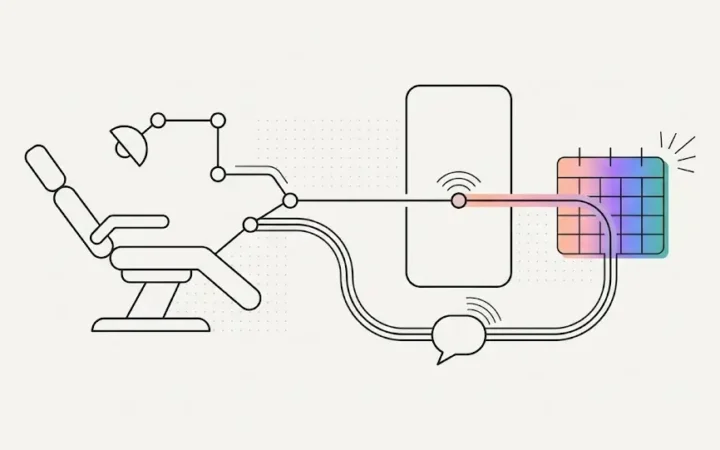
- Make “yes” effortless. The plan goes to the patient’s phone in plain language; they accept or decline with a tap, and the answer flows back to the team instantly.
- Recover the undecided. The soft “not yet” gets followed up with messages written for that specific patient — their crown, their expiring benefit, their preferred channel — until they act, automatically.
Each move is coordinated by ELVA’s AI brain for dental practices. Each move removes a reason to hesitate. None of them adds pressure — which is exactly why it works. Patients say yes when they understand the treatment, trust the number, see why it matters now, and find it easy to act. That’s case acceptance the way a great practice already wants to do it; ELVA makes it consistent, with every patient, every time, under the rules the practice sets once.
Why this number, before any other
Compare the alternatives. New-patient acquisition costs marketing dollars and front-desk hours, and a new patient accepts at the lowest rates of anyone in your chairs (industry benchmarks put new-patient acceptance around 25–35%, versus 40–50% for existing patients). Adding operatories costs capital. Raising acceptance costs neither — the diagnosis is done, the trust is half-built, the chair is already scheduled for hygiene twice a year. It’s also the growth lever that’s healthiest for patients, because every recovered case is recommended care that actually gets delivered.
For a group, the same logic compounds across locations — case acceptance is one of the levers behind growing production without growing overhead. For any practice, it starts in the same place: see the real number, find where the friction lives, and remove it. See how the engine works step by step.
Frequently Asked Questions
What is a dental case acceptance rate?
The percentage of recommended treatment that patients actually proceed with — measured by cases, patients, or (most honestly) by dollar value of treatment presented versus scheduled. It’s the most direct measure of how much diagnosed care converts into delivered care and collected production.
What is a good case acceptance rate for a dental practice?
Benchmarks vary by definition, but industry data puts dollar-weighted averages around 35–45%, broader definitions near 50–60%, and top performers far higher — Henry Schein One’s 2024 report measured the top 10% of 2,500+ practices at 83%. Below ~50% by dollar value usually signals specific, fixable friction.
Why do dentists overestimate their case acceptance?
Because small, urgent treatment gets accepted at very high rates and skews the feel of the average, while large and elective cases quietly stall. Industry tracking finds many practices run as much as 30 points below the dentist’s own estimate — the gap lives in the comprehensive cases nobody measured.
Why is case acceptance cheaper to improve than getting new patients?
Because everything expensive is already done: the patient is acquired, the diagnosis is made, the relationship exists. New patients cost marketing spend and accept at the lowest rates (roughly 25–35%); lifting acceptance converts care that’s already recommended, in chairs you already run.
Does improving case acceptance mean pressuring patients?
No — pressure is one of the reasons patients decline. Acceptance rises when the real causes of hesitation are removed: confusion about the plan, uncertainty about cost, invisible urgency, and dropped follow-up. Clarity and honest numbers convert; pressure retreats.
Start with the number. See AI treatment plan follow-up, or begin where most cases are lost: why patients decline dental treatment.