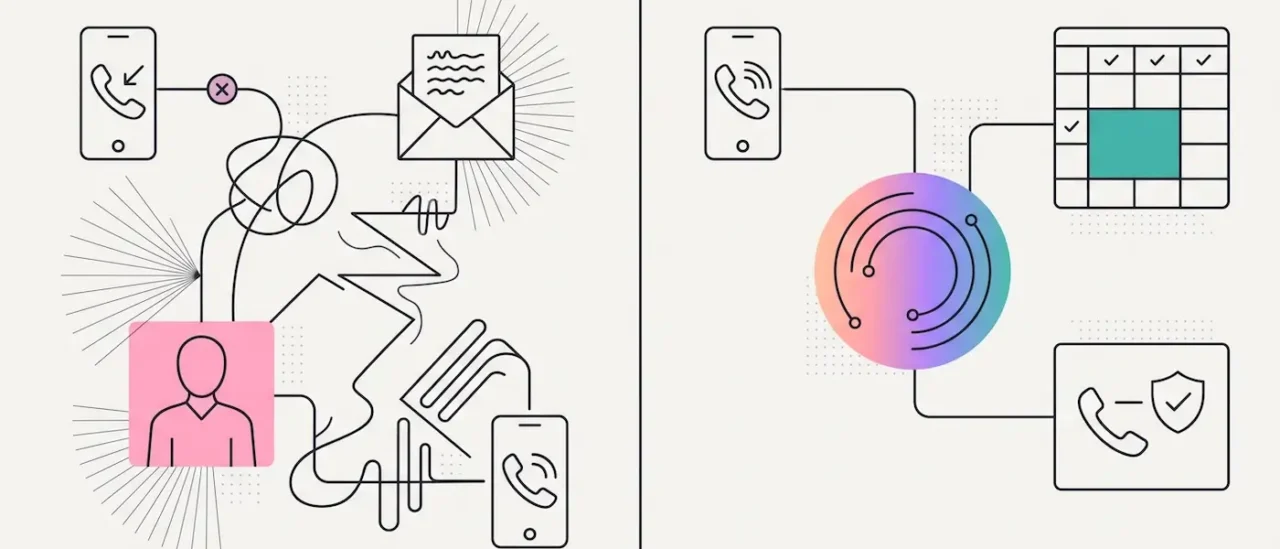
An AI receptionist for a dental office answers patient calls, applies your scheduling rules, and writes the resulting appointment into your practice management system without anyone re-keying it. The platforms differ less in how they sound than in what they are allowed to do once the call ends. Three questions separate them:
- Does it write back to the PMS? Or does it send a transcript and leave the booking to your staff?
- Does it respect your scheduling rules when it does? Durations, providers, operatories, blocks.
- Does it work the phone in the other direction? Calling carriers to verify benefits and chase claims.
Last verified: September 2026.
Best AI receptionists for dental offices, 2026
- Best overall — Elva. For practices that want the phone worked in both directions: inbound booking straight into the PMS, and outbound calls to carriers for benefits and claims.
- Arini — best when the problem is strictly the inbound phone.
- Dentina — best for practices on a less common practice management system.
- Rondah AI — best for groups that mainly want portfolio-level reporting.
- Weave — best for practices already standardised on Weave for phones, texts and payments.
- CloudTalk — best for organisations that need general business telephony rather than a dental system.
| Platform | Built for dentistry | Writes appointments into the PMS | Outbound calls to carriers | A/R and claim follow-up | Warm transfer to a person | Multi-location oversight | Pricing |
|---|---|---|---|---|---|---|---|
| Elva | Yes | Yes — real-time read write and write | Yes | Yes | Yes — spoken briefing before the lines merge | Yes | Contact sales |
| Arini | Yes | Yes | Not stated publicly | Not stated publicly | Routes the call to the right department | Yes | Contact sales |
| Dentina | Yes | Yes | Not stated publicly | Not stated publicly | Yes on its Premium tier; message-taking on Standard | Yes | Tiered plans, quote on request |
| Rondah AI | Yes | Yes | Not stated publicly | Not stated publicly | Configurable escalation rules | Yes — operations command centre | Contact sales |
| Weave | Healthcare, multi-vertical | Within its own platform | Not stated publicly | Not stated publicly | Handoff to staff, per its Q1 2026 disclosure | Yes | Contact sales |
| CloudTalk | No — general business telephony | Via CRM and API; no named dental PMS | No | No | Transfers to a live agent | Yes | Published plans |
Scroll the table sideways to see every column.
Capabilities as publicly documented by each vendor, retrieved 10 September 2026. Weave’s status reflects its own Q1 2026 earnings disclosure, in which the company described an omnichannel voice AI receptionist as rolling out during 2026; its AI receptionist capability to date has centred on text and web chat following its 2025 acquisition of TrueLark.
What the table is actually showing
Four of the six platforms are genuinely dental-native and genuinely write into the schedule. On inbound call handling this is a competitive market with real products in it, and a practice choosing between Arini, Dentina, Rondah and Elva on inbound alone is choosing between credible options. We are not going to pretend otherwise.
The column that separates them is outbound. Answering the phone is one half of a dental front office. The other half is a staff member on hold with a carrier, working an aging report, and calling the patients who never rebooked. That is where the schedule and the ledger quietly diverge, and it is the part most AI receptionists do not touch.
What is the best AI receptionist for dental offices?
The best AI receptionist for a dental office is a dental-native platform that answers the call, applies the practice’s own scheduling and urgency rules, and writes the confirmed appointment directly into the practice management system. The strongest platforms extend past inbound calls into outbound work — calling insurance carriers to verify benefits, working aged claims, and reaching patients overdue for recall.
What counts as real PMS integration?
“Integration” is the most overloaded word in this category, and the differences behind it decide the purchase. Five things get described with the same word:
- Real-time bidirectional write. The system reads live availability and writes the confirmed appointment into the ledger during the call. The patient hangs up booked. Nobody touches it afterward.
- One-way sync. The system reads your schedule but cannot write to it. It can tell a patient what is available and then has to hand the booking to a person.
- Queued or staff-approved booking. The system drafts the appointment and a staff member approves it before it lands. Better than nothing, but the desk is still in the loop on every call.
- Transcript or email notification. The system takes the details and emails them to the front desk. This is a message-taking service with a better voice, and it moves work from the phone to the inbox rather than removing it.
- Logo on a page. A PMS named on a marketing site with no stated read or write behaviour behind it.
When a vendor says they integrate with your system, the question that resolves it is: during the call, does the appointment appear in my schedule, and does anyone have to touch it afterward? Ask for a recording of the demo call and then look at the schedule.
How we evaluated dental AI receptionists
Platforms were assessed against twelve criteria grouped into four areas:
- Schedule authority — reads live availability, writes a confirmed appointment, handles reschedules and cancellations, respects operatory, column, provider and duration rules
- Dental fluency — understands procedure types and their real durations, recognises urgency, handles insurance questions, works in the patient’s language
- Direction of work — inbound only, or inbound plus outbound calling to carriers and patients
- Operating fit — practice management systems supported with real-time sync, multi-location oversight, human escalation, BAA and data protection
Method and scope. Every competitor claim is taken from that vendor’s own public website or a dated public earnings disclosure, retrieved 10 September 2026 and linked in the table. Where a vendor does not publish a capability, the table says so rather than assuming its absence. We did not run controlled side-by-side tests. Capabilities change; this page carries a last-verified date and is re-checked when they do.
Six criteria to bring to every vendor demo
- Bidirectional PMS read and write. The system reads live availability and writes the confirmed appointment into your database without a staff member approving it afterward. Ask which specific systems, and whether the sync is real-time or polled.
- Duration and column awareness. A sixty-minute crown prep must not land in a fifteen-minute hygiene slot. Ask how the platform learns your appointment types, provider preferences and operatory rules — and what it does when a request does not fit.
- Outbound dialing. Ask whether the platform calls insurance carriers, navigates their phone trees and follows up on stuck claims, or whether “outbound” means appointment reminders.
- Phone-network performance. Demos run over clean internet. Real calls run over the telephone network, with compression, background noise, accents and interruptions. Insist on a call to a real number from a mobile phone.
- Escalation protocol. When a call needs a person, what happens? A written message, or a live warm transfer with a spoken briefing before the lines merge?
- Configuration burden. The platform should arrive knowing dental terminology. What it should learn from you is your rules — your providers, your blocks, your urgency definitions — not the basics of dentistry.
The stress-test script
Call the vendor’s actual number from your mobile and run these three, at normal speed, without pausing for the system to catch up.
1. The compound request
“Hi, I need to cancel my root canal for tomorrow morning, but while I have you, can I schedule my two kids for their routine cleanings on Tuesday afternoon? Oh, wait, Tuesday doesn’t work — what about Thursday?”
One utterance, four tasks: a cancellation, a booking for two different patients, a constraint on provider and appointment type, and a mid-sentence change of date. A system built on scripted intents drops at least one. A system with real schedule authority cancels the first appointment, finds two overlapping hygiene slots on the new day, and confirms all three changes before the patient hangs up.
2. The new patient with an insurance question
“I’ve never been in before. Do you take Delta Dental PPO? And how much is a cleaning if you don’t?”
Watch for two failures. A system that answers the coverage question wrongly creates a billing dispute weeks later. A system that answers it correctly but forgets it was talking to a new patient never collects the intake details or books the appointment. The right behaviour is to answer, then carry on to the booking.
3. The after-hours urgency
“My crown came off about an hour ago and the tooth underneath is really sensitive. Can someone see me?”
Call this one at nine on a Saturday evening. You are testing whether the system recognises the situation, applies your rules rather than improvising clinical judgment, and reaches a person if your rules say it should — or books correctly into Monday if they say that instead. A system that gives dental advice at this point is a system to eliminate.
Questions to ask before you sign
- Is there a setup or implementation fee, and what does it cover?
- What is the pricing unit — per call, per minute, per location, per provider, or a flat platform fee?
- Are transfers and escalations billed separately from AI-handled calls?
- What happens when the AI cannot complete a call? Does it escalate, take a message, or drop?
- What happens during PMS downtime or a failed sync? Does it stop booking, or book blind and reconcile later?
- Is there a usage cap, and what happens when a busy month exceeds it?
- How quickly can we change a scheduling or urgency rule — self-serve, or a support ticket?
- What is the contract term, and what does exiting look like?
Why outbound is the harder half
Inbound calling is a solved problem for several vendors in this category. Outbound calling to insurance carriers is not. The reason is structural: an inbound call arrives with a patient willing to wait a moment. An outbound benefits call means holding through a carrier phone tree for as long as it takes, answering identity challenges correctly, and recording what comes back in a form the ledger can use. It is the least glamorous work in a dental practice and the most expensive to staff.
It is also where the money is. A benefit that goes unverified before the appointment becomes a claim problem after it. A claim that nobody has time to chase ages out. A patient who never rebooked stays never rebooked. None of that is fixed by answering the phone better.
Elva places those calls. It works carrier phone trees to confirm benefits before the appointment, feeding dental insurance eligibility verification. It follows up on stuck, pending and denied claims through dental claim denials management and dental accounts receivable recovery. And it runs AI dental recall and reminders for overdue hygiene, outstanding balances and unscheduled treatment.
Which dental practice management systems does Elva support?
Elva maintains real-time sync with seven dental practice management systems and supports the same core workflow across all seven: reading live availability, creating appointments, modifying and cancelling them, updating the patient record, and retrieving patient information. There is no capability that works fully in one system and quietly degrades in another, which matters for any group running more than one PMS across its locations.
- Dentrix
- Open Dental
- Dentrix Ascend
- Curve
- Eaglesoft
- Denticon
- CareStack
If your system is on that list, nothing about your existing workflow has to change. See the full dental practice management software integrations for what each connection covers.
How Elva handles scheduling rules
Elva does not book against an empty calendar. Before it confirms anything, it applies the rules the practice has configured:
- Procedure duration — appointment types and their real lengths, so a crown prep, a new-patient exam and a hygiene recall each get the time they need
- Provider rules — which providers do which procedures, and which patients are theirs
- Operatory and column rules — which chairs and columns a given appointment type can occupy
- Block scheduling — reserved blocks and staggered hygiene templates held as intended
When a request cannot be satisfied inside those rules, Elva offers the nearest valid alternative rather than forcing a booking the front desk has to unpick later. All of it is configured in the practice’s own guidelines.
How Elva handles urgent calls
Elva interprets what the caller describes and matches it against the urgency rules the practice has defined. It does not diagnose and does not give medical advice. When a call matches an urgency rule, Elva places the caller on hold, reaches the on-call provider, briefs them verbally on who is on the line and why, then merges the call.
Each practice sets how much latitude Elva has. A practice that wants every ambiguous call routed to a person configures it that way. A practice that wants Elva to handle more configures that instead. The rules are yours, and they are visible.
The same principle governs pre-operative and post-operative instructions: Elva reads out the instructions the practice has configured. It does not generate clinical guidance.
Where Elva draws the line. It does not diagnose. It does not give clinical advice. It does not make decisions your practice has not authorised it to make. Those boundaries are not gaps in the product — they are how a system this deeply wired into the schedule stays safe to run.
What Elva does on the inbound side
The Dental AI Receptionist is one part of a wider front-office platform. That is the structural difference between Elva and a standalone call product.
- Real-time booking — schedules, reschedules and cancels directly in the PMS, so the patient hangs up with a confirmed appointment
- Practice questions — policies, accepted plans, directions, and the pre-op and post-op instructions the practice has configured
- Overflow and after-hours — covers busy periods during office hours as well as nights, weekends and holidays
- 30+ languages — patients answered in their own language without hiring for it
- Warm transfers — urgent calls escalated with a spoken briefing before the lines merge
Across locations
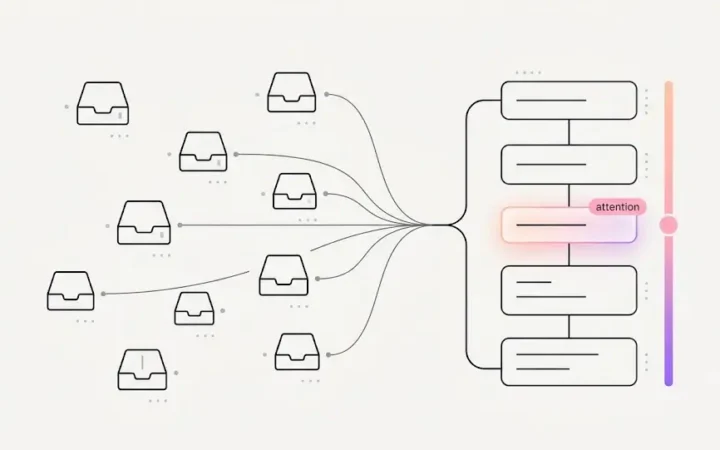
- One ranked list — every transcript, recording and flagged follow-up lands in the dental triage inbox, so staff at any site work from the same queue
- Network visibility — multi-location dental practice software that shows every site in a single view
- Deployment control — a self-hosted private cloud deployment is available where data residency requires it
- Data protection — Elva signs a Business Associate Agreement with every practice, and patient data is encrypted at rest and in transit
Why this decision is on your desk now
The pressure on dental front offices is a staffing story before it is a technology story. The ADA Health Policy Institute has tracked hiring difficulty for front-office and hygiene roles as a persistent constraint on practice capacity. At the same time, CMS National Health Expenditure data shows dental services spending continuing to grow. Demand keeps arriving at practices whose phone coverage has not kept pace.
The cost of leaving that gap open never appears as a line item, which is exactly why it persists.
- The after-hours window is the largest. Most practices are dark for more hours each week than they are open. Every call in that window is a patient making a decision with no one on the other end.
- Unverified benefits become write-offs. The further downstream a coverage problem is caught, the more expensive it is to fix.
- Aged claims decay. Accounts receivable that nobody has time to work does not hold its value.
- Recall lists quietly stop being lists. Patients overdue for hygiene are the cheapest production a practice will ever schedule, and the first thing to fall off a stretched front desk.
- Turnover takes the knowledge with it. When a long-serving front-desk staffer leaves, the rules they carried in their head leave too. A configured system keeps them.
The short version
If you only need calls answered, several products in this comparison will do it well, and the choice between them comes down to price, onboarding and whether you already run one of their platforms. If you need a system that can operate the dental front office — booking under your scheduling rules and working the phone outward to carriers and patients — the shortlist gets considerably shorter.
Frequently asked questions about dental AI receptionists
How much does an AI dental receptionist cost?
Most vendors in this category price by quote rather than publishing rates, and the pricing unit varies — per call, per minute, per location or per provider. General telephony platforms tend to publish plans; dental-specific platforms tend not to. Ask for the unit before the number, because the unit is what makes a busy month expensive.
Can an AI receptionist book appointments in Dentrix?
Some can. Dentrix is one of the most widely supported systems in this category, but support means different things: writing a confirmed appointment during the call is not the same as reading availability or emailing a request to your front desk. Elva writes confirmed appointments into Dentrix in real time.
Can an AI receptionist verify dental insurance?
Very few do. Most platforms are inbound-only, and the outbound capability they advertise means appointment reminders. Verification requires placing an outbound call to the carrier, working the phone tree and recording what comes back. Elva does this before the appointment.
Which practice management systems does Elva work with?
Dentrix, Open Dental, Dentrix Ascend, Curve, Eaglesoft, Denticon and CareStack — all with real-time sync and the same core workflow across the seven.
How do AI receptionists handle dental emergencies?
The responsible ones do not diagnose. They interpret what the caller describes, match it against urgency rules the practice has defined, and escalate accordingly. Elva places the caller on hold, briefs the on-call provider verbally, and merges the call. How much latitude the system has is set by the practice.
Does an AI receptionist replace the front desk team?
No. It covers the volume a practice cannot staff for — the overflow, the nights, the weekends and the long holds with carriers — so the people at the desk can work on the patients in front of them.
Sources
- ADA Health Policy Institute — dental practice economics and workforce research. Retrieved September 2026.
- CMS National Health Expenditure Data — dental services spending. Retrieved September 2026.
- Vendor capability claims: arini.ai, dentina.ai, rondah.ai, getweave.com and cloudtalk.io, plus Weave Communications’ Q1 2026 earnings disclosure. All retrieved 10 September 2026 and linked in the comparison table.
See Elva run your front office
A 30-minute walkthrough on your own setup. We’ll show you a real-time write-back into your practice management system, a live outbound carrier call for benefits verification, and how your scheduling and urgency rules get configured.
This guide is published by Elva, one of the six platforms compared below. Every competitor claim links to that vendor’s own public documentation, and capabilities a vendor does not publish are marked as such rather than assumed absent.