Here’s the quiet anatomy of most “lost” production: the consult went fine. The patient was interested — genuinely. They said they’d look at the calendar and call back. Then school pickup happened, and a work deadline, and three weeks later the treatment plan is a half-remembered conversation and a folded printout somewhere in a car. The case never died; it just lost momentum, and nobody caught it. Effective treatment plan follow-up isn’t about chasing harder — it’s about removing the gap where momentum goes to die, and recovering the cases that slip through anyway.
Two failures create that gap. The plan lives on paper or in the patient’s memory, so saying yes requires a phone call they keep not making. And the follow-up, when it happens at all, is a generic “just checking in!” that reads like every other notification they ignore. ELVA closes both.
Treatment Plan Follow-Up, Step One: Make “Yes” a Tap
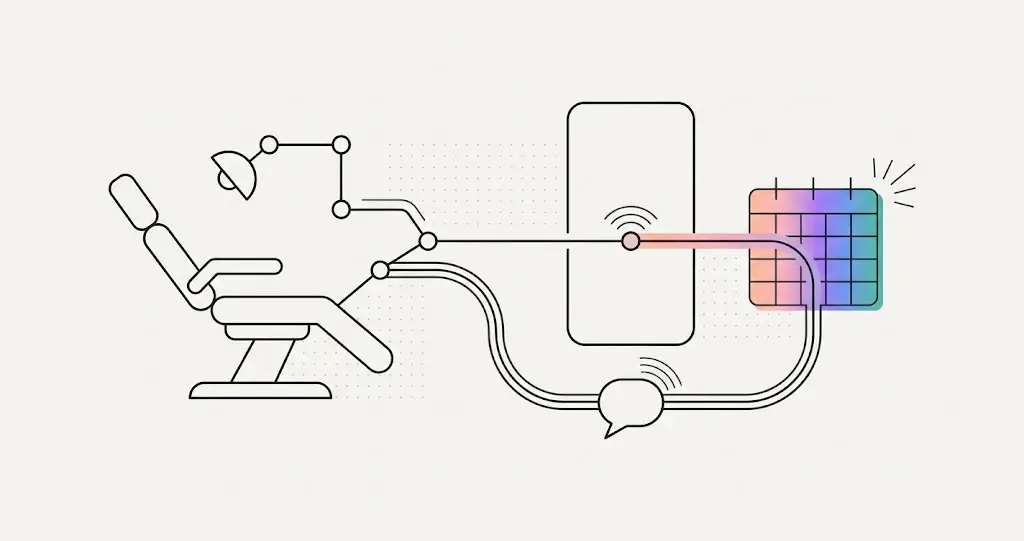
After the consult, the team shares a clean, plain-language treatment plan straight to the patient’s phone — a private, secure link, no portal, no password. The patient reviews it on their own time, with nobody watching them decide, and accepts or declines with a tap. Three things about this flow do the converting:
- The pressure is gone. People decide better without a salesperson on the line — the same reason they felt safe saying “I’ll think about it” in the office now works in the practice’s favor.
- The answer comes back instantly. The accept or decline flows straight to the team as a follow-up task, recorded on the patient’s profile. No more “did the Hendersons ever get back to us?”
- There’s no ambiguity about what was agreed. The plan the patient saw is captured exactly as shared — so the yes means what everyone thinks it means.
The path from “I’m interested” to “I’m scheduled” collapses from days of phone tag to a single tap. Momentum stops being the enemy.
Treatment Plan Follow-Up, Step Two: Follow Up Like You Know Them
Some patients still won’t decide right away — and that soft “not yet” is where most practices lose the case, because the follow-up is a blast. ELVA’s follow-up is the opposite of a blast: it runs on ELVA’s AI brain for dental practices, a deep understanding of the whole patient relationship, and every message is written individually for that person — referencing their recommended crown, their expiring benefit, their preferred time of day, in their language, on the channel they actually answer.
A message like that lands completely differently than “Hi! Just a reminder about your treatment plan.” It feels like the practice remembered them — because it did. And it arrives automatically, at the right moments, escalating gently and stopping the instant they book — the same engine that runs the practice’s wider recall, pointed at the highest-value list a practice has: diagnosed, undecided treatment.
What the team sees
From the practice side, the whole journey is visible: who got a plan, who opened it, who accepted, who declined, and who’s gone quiet — with the follow-up running on its own and the responses landing as tasks. Nothing depends on a coordinator remembering to chase, and nothing gets chased that’s already resolved. The decline is information too: a recorded “no” with the patient’s profile updated beats a permanent maybe, because a practice can re-approach a “no” honestly next year — a maybe just evaporates.
The last move of the engine
This is the fifth move of the dental case acceptance rate engine, and it’s the one that compounds quietly: the prepared conversation, the honest number, and the visible cost of waiting win the cases that can be won today; the effortless yes and the personal follow-up collect them — today’s and the ones that needed three more weeks. See the flow end to end.
Frequently Asked Questions
What is effective treatment plan follow-up?
Two things working together: making acceptance effortless (the plan on the patient’s phone, reviewable on their time, accepted with a tap) and following up personally when they don’t decide — messages written for that specific patient and their specific treatment, on their preferred channel, until they act.
How does sharing a treatment plan to the patient’s phone work?
The team shares a clean, plain-language version of the plan as a private, secure link — no portal or password. The patient reviews it on their own time and accepts or declines with a tap; the answer flows back to the team instantly as a task, recorded on the patient’s profile, with the plan captured exactly as shared.
Why do patients respond to personalized follow-up and ignore reminders?
Because a generic “just checking in” reads like every other notification, while a message that references their specific recommended treatment, their expiring benefit, and their preferred time feels like the practice actually remembered them. Relevance is the difference between follow-up and noise.
What happens when a patient declines the treatment plan?
The decline is recorded on their profile and flows to the team — which is more valuable than it sounds. A recorded “no” can be revisited honestly later (circumstances change, benefits reset); an ambiguous maybe just evaporates. Either answer beats silence.
Does the follow-up stop once the patient books?
Immediately. The follow-up sequence is goal-aware — the moment the patient accepts or schedules, it ends. No one gets a “don’t forget your treatment plan!” message the morning after they booked it.
Stop losing cases to momentum. See AI treatment plan follow-up, or start from the top: dental case acceptance rate.