Most dental practices shopping for an AI receptionist for dentists never think to ask whether the vendor is actually permitted to connect to their practice management software — they compare features, watch a demo, and assume “integrates with Dentrix” means what it sounds like. It doesn’t always. Authorization is the one part of that claim you can check yourself, in a couple of minutes, before you ever get on a sales call.
Quick answer
An AI receptionist’s “authorized vendor” claim is checkable, not just something to take on trust. Dentrix and Dentrix Ascend both run through Henry Schein One’s API Exchange, which publishes its own list of approved integration partners. Open Dental runs a separate program with its own API and its own published vendor list. Being authorized for one doesn’t mean a vendor is authorized for the other — they’re independent certifications, and a practice comparing options should check each one directly rather than accept a vendor’s word for it.
Why Verifying AI Receptionist Vendor Authorization Matters
Every AI receptionist vendor says it “integrates with” your practice management software. That word covers a wide range of actual technical reality — from a manual, one-time data export all the way to a certified, real-time, two-way connection. Authorization status is the one part of that claim a practice can verify independently, without needing to take anyone’s marketing page at face value.
It also isn’t just a formality. Henry Schein One’s own security guidance is direct about why the program exists: approved integrations use sanctioned pathways like OAuth 2.0 authentication and require SOC 2 Type II certification before a vendor gets endpoint access to a practice’s Dentrix data. Connections built outside that program skip those safeguards — which is the actual risk, not just a technicality. Open Dental’s own guidance runs the same warning in different words: unauthorized or unsafe integrations that write incorrectly to the database can corrupt practice data and, in Open Dental’s own phrasing, open a practice up to billing errors and fraud.
Two competing PMS companies landed on the same conclusion independently. That’s worth taking seriously — and it’s exactly the kind of thing how to evaluate an AI receptionist recommends checking before you trust a vendor with your schedule.
How to Verify Dentrix and Dentrix Ascend Vendor Authorization
Henry Schein One operates the API Exchange — a published, maintained list of independent software vendors approved to connect to Dentrix and Dentrix Ascend. As of this research, that list includes more than 140 approved vendors spanning patient engagement, billing and claims tools, AI diagnostics, and virtual reception (Henry Schein One, 2026).
To get listed, a vendor goes through Henry Schein One’s own vetting — including the OAuth 2.0 and SOC 2 Type II requirements mentioned above — rather than building a workaround connection outside the program. The list itself is public, which means a practice doesn’t have to take a vendor’s claim on faith; it can look the vendor up directly. See how this works specifically for Elva’s Dentrix integration and AI receptionist for Dentrix.
How to Verify Open Dental Vendor Authorization
Open Dental runs its own, separate API program, with its own published list of approved third-party vendors. It’s an entirely independent certification from Henry Schein’s — a vendor authorized for Dentrix has no automatic standing with Open Dental, and vice versa. Open Dental’s own documentation is explicit that vendors outside this program can write unsafely to a practice’s database, and specifically flags the risk of billing and financial-record corruption from unvetted integrations.
If a practice runs Open Dental, the Dentrix Authorized Vendors list is simply the wrong place to check — Open Dental’s own vendor page is the one that matters. See Elva’s Open Dental integration for how that connection works.
What “Integrates With Your PMS” Actually Means
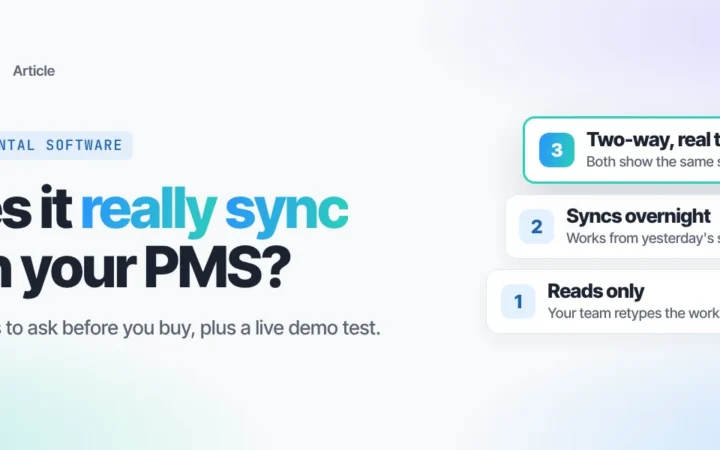
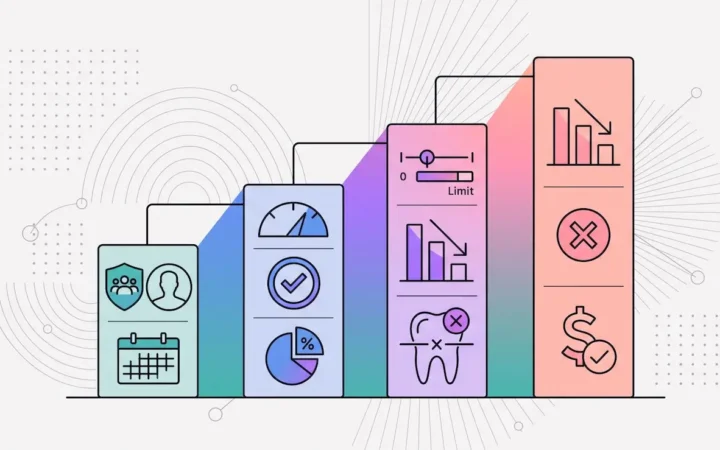
Vendor claims in this category sit on a spectrum, and “authorized” only confirms where a vendor sits on the high end of it:
- Manual export — someone periodically pulls a data file by hand. No live connection at all.
- One-way read — the tool can see your schedule but can’t write anything back; a booking still has to be entered by staff.
- Unofficial write access — the vendor has found a way to write data into your PMS without going through the platform’s own approved program. This is the category both Henry Schein and Open Dental warn about directly.
- Authorized, real-time, two-way sync — the vendor is certified through the PMS’s own program, reads live data, and writes changes back automatically, the moment they happen.
A vendor can genuinely say “we integrate with Dentrix” from anywhere on this list. Authorization status is what narrows that claim down to something specific and checkable.
Questions to Ask an AI Receptionist Vendor About PMS Authorization
- Can you name your specific listing on your PMS’s authorized vendor list? A vendor with real authorization can answer this immediately and specifically — not with a general assurance that they “integrate” with your system.
- Is your authorization for on-premise Dentrix, Dentrix Ascend, or both? These are different products with different underlying architecture. A vendor’s authorization for one doesn’t automatically extend to the other.
- Does the connection go through your PMS’s official program, or a workaround? This is the actual question behind “is it authorized” — ask it plainly.
- What happens to a booking if this connection ever breaks? An authorized, sanctioned connection is maintained as part of the PMS vendor’s own security program; a workaround connection isn’t.
- Can you show me a live demo where a call ends with the appointment appearing in my actual PMS, not a mockup? This is the practical proof behind everything above.
For the full evaluation beyond authorization alone, see how to compare AI receptionist vendors or the named comparisons in the best AI receptionist for dental offices guide.
What PMS Integrations Does Elva Offer?
Elva integrates with leading practice management systems, providing real-time, two-way synchronization across calls, recall, insurance, billing, and scheduling.
Elva is an Official API Vendor Partner with Henry Schein One for Dentrix Ascend, as confirmed on Henry Schein One’s Authorized Software Vendors listing. Elva is also an Authorized API Partner for Open Dental, enabling secure, real-time, two-way integration.
Elva supports:
- Dentrix
- Dentrix Ascend
- Open Dental
- Eaglesoft
- Curve
- Denticon
- CareStack
Across these integrations, Elva keeps critical practice workflows synchronized in real time, including calls, recall, insurance, billing, and scheduling.
Explore Elva’s PMS Integrations page to see all supported integrations and get more details on how each one works.
Frequently asked questions
How do I find the Dentrix authorized vendor list? Henry Schein One publishes it directly as part of their API Exchange program. It’s the definitive source — check there rather than relying on a vendor’s own claim of authorization.
Does Dentrix authorization also cover Dentrix Ascend? Not automatically. On-premise Dentrix and Dentrix Ascend run on different underlying architecture, and a vendor’s authorization can be specific to one, the other, or both — ask which.
Is Open Dental’s authorized vendor list the same as Dentrix’s? No. They’re entirely separate programs run by different companies. A vendor authorized for one has no automatic standing with the other.
What’s the actual risk of using an unauthorized integration? Both Henry Schein One and Open Dental warn that connections outside their official programs can write incorrectly to a practice’s database — risking data corruption, scheduling errors, and in Open Dental’s own language, billing and financial-record integrity.
Does authorization mean an AI receptionist is HIPAA compliant? Not by itself. Authorization is about the technical integration with your PMS; HIPAA compliance is a separate requirement that depends on a signed Business Associate Agreement and how the vendor handles patient data more broadly. Ask about both separately.
What if a vendor won’t answer which specific list they’re on? Treat that as an answer in itself. A vendor with real, current authorization can name their listing immediately.