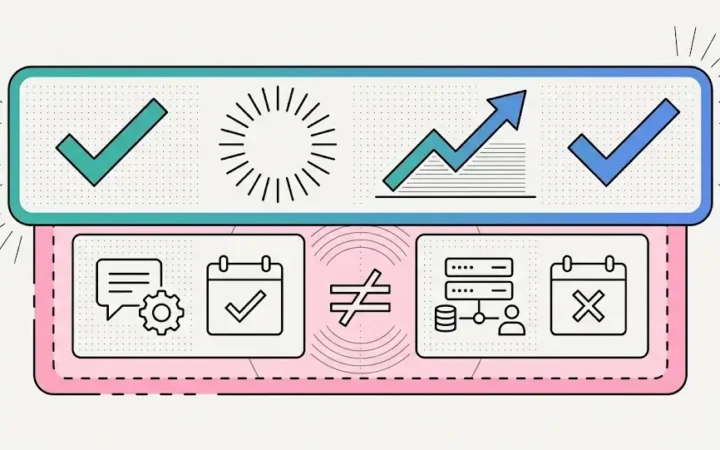
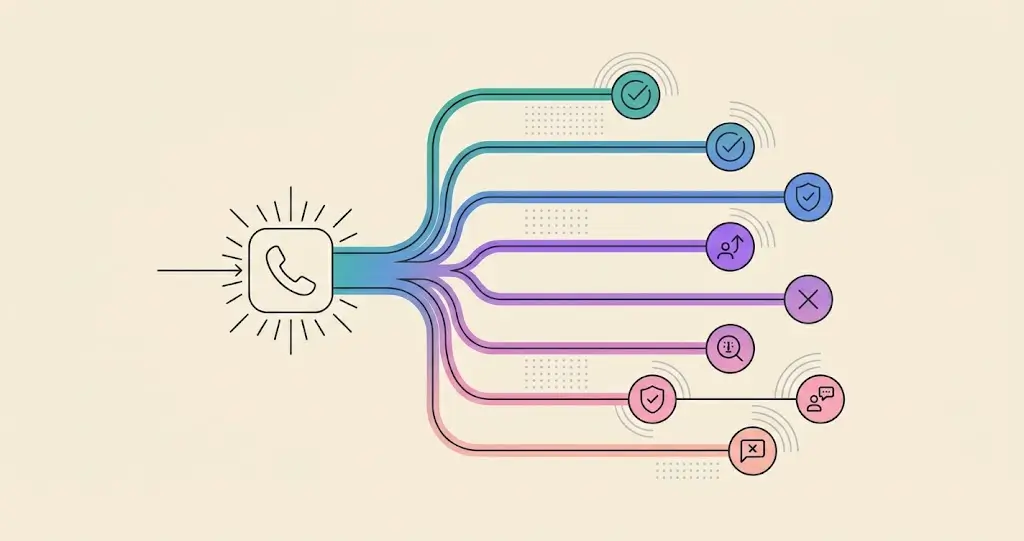
Every AI receptionist sounds excellent in a demo. That is the problem. The demo is the one call the vendor controls: a calm patient, a simple request, clean insurance, a booking that lands on the first try. It tells you almost nothing about how the system behaves when a real patient is on the line and the call goes sideways.
Then the system goes live, and the second call of the day is a parent whose child just swallowed something, talking over the bot while the front desk is on another line. Nobody demos that call. But that call is the job.
So the real question isn’t which vendor has the smoothest demo. It’s how to evaluate an AI receptionist on the calls vendors never show you, before a real patient becomes the test. This guide covers what to prove, how to test it, the five questions that separate vendors, and what a useful evaluation report looks like.
What It Means to Actually Evaluate an AI Receptionist
A demo shows you whether a system can handle the easy path. An evaluation shows you what it does everywhere else. The difference is who chooses the calls: in a demo, the vendor does; in an evaluation, you do, and you choose the ones most likely to break it.
That means testing against the messy calls a practice actually gets: the patient in real pain who needs escalation, not a Tuesday slot. The caller whose insurance “just changed.” The person fishing for medical advice the system should never give. The caller who interrupts, changes topic, and pushes back. If a system has only ever been run through friendly calls, it hasn’t been evaluated. It has been demoed.
The word “tested” is doing a lot of unearned work in dental AI sales right now. A system run through a handful of friendly calls and a system put through adversarial, verified testing can both be described as “tested.” They are not the same, and the gap between them is where patient safety and revenue quietly leak.
The Eight Things to Prove Before You Trust an AI Receptionist
A serious evaluation measures the failure modes that cost a practice money and safety, not the ones that look good in a highlight reel. Before you put any dental AI receptionist in front of patients, you should be able to prove how it handles all eight:
- Emergency handling: does it recognize a genuine emergency and escalate to a person, or cheerfully offer the next available cleaning?
- Protected health information: does it avoid collecting or repeating PHI in ways it shouldn’t?
- Medical advice boundaries: does it stay in its lane, or start diagnosing?
- PMS booking verification: did the appointment actually get created in your practice management system, or did the bot just say it did?
- Escalation rules: does it hand off to a human at the right moment, with the context they need?
- Multi-location routing: does it send the patient to the right office and provider across a group?
- Cancellation saves and lead capture: does it try to keep the booking before the caller hangs up?
- Adversarial pressure: what does it do when the caller is rude, manipulative, or probing for something unsafe?
If you can’t answer those eight with evidence, you are not evaluating the product. You are evaluating the demo team.
How to Test an AI Receptionist on the Calls the Vendor Didn’t Choose
Testing an AI receptionist properly runs in three stages. The goal across all three is the same: replace impressions with evidence you can act on.
1. Build a set of scenarios around your practice
Start from your own rules, not a generic script. Write down the calls you most need to get right: your emergency definitions, your escalation policy, your insurance edge cases, and, for a group, your real routing between locations. Each scenario should include a “trap moment,” the point where a weaker system fails: the emergency that only surfaces on the third turn, the insurance change dropped mid-sentence, the request for advice the system should decline.
Then decide who is calling. A cooperative caller reading from a happy path tells you little. Define the callers that stress a system: the anxious patient, the elderly caller who needs patience, the parent talking over the bot, the caller who interrupts and pressures. How intense they are and whether they talk over the system matter as much as what they ask.
2. Place real calls to the live number
Run the scenarios as actual phone calls to the system you’re evaluating, the same way patients will reach it. If it has a phone number, it can be tested, and no integration should be needed to start. This is the deliberate inverse of a demo: a demo selects the calls that flatter the system; testing selects the calls that stress it.
3. Check what actually happened, not what the system said
Read the transcripts against your scenarios and mark each one: handled, risky, or a critical failure. Then check the record. An AI receptionist can report that it booked an appointment; only your practice management system can confirm the appointment exists. The gap between those two is exactly where silent revenue loss hides, and it’s the step most evaluations skip.
Five Questions That Separate Dental AI Receptionist Vendors
Sit through three demos in a week and you stop being able to tell them apart. Every vendor answers calls 24/7, books appointments, and shows you a clean call that ends with a happy patient. The real differences never come up on a sales call, because no vendor volunteers its weak spots. These five questions pull them back into the light.
How does it handle a call that goes wrong?
Any system can book a cleaning for a calm caller. Ask the vendor to show you a real call where something went wrong: a genuine emergency, a caller who interrupts and changes topic, a request the system shouldn’t fulfill. Not a slide describing it, an actual call. A vendor confident in its product welcomes that scrutiny. A vendor selling polish changes the subject.
Does the booking really land in the PMS?
There’s a meaningful difference between an AI that says it booked an appointment and one that wrote the appointment into your practice management system and confirmed it. Ask exactly how bookings are written, to which PMS, and how failures are surfaced. Ask whether the vendor is an authorized integration partner for your PMS, too; here’s how to verify AI receptionist vendor authorization.
What happens to your patient data?
Ask whether your data is isolated, whether it’s ever used to train models serving other organizations, and where it lives. The answer you want is unambiguous: siloed, encrypted, never used to train models for anyone else, with a signed BAA and access you control by role. If the vendor gets vague here, you’ve learned something the demo wouldn’t have told you.
Is it one system or several tools stitched together?
Many “platforms” are a booking widget, a texting tool, and a forms app sharing a logo. The tell is whether the system connects events across functions: does a missed call become a follow-up task? Does an unscheduled treatment plan surface as a recall opportunity? Ask to see a workflow that crosses three functions and watch whether it flows or whether the rep switches tabs.
How does it improve after a mistake?
Ask what happens after the system mishandles a call. Does anyone find out? Does it get corrected? Can the vendor show a trend, or only a testimonial? Better still, ask whether the vendor will let its system be measured by a standard it didn’t write. That willingness is one of the most honest signals you’ll get in the whole buying process.
Every one of these reduces to a single test: will this vendor show you evidence, or only assurances? Once you have a shortlist, run all five against each name; our best AI receptionist for dental offices guide compares the main options on PMS write-back, outbound calling and BAA statements, and the AI receptionist cost breakdown covers what to budget.
What a Useful Evaluation Report Contains
The output of a good evaluation isn’t a single accuracy number floating free of context. It’s a readiness verdict your operations team can act on and your vendor can’t wave away:
- A one-line verdict: ready, ready with conditions, or not ready, and for which call types.
- Critical failures, each tied to the transcript where it happened.
- Workflow gaps: calls the system technically handled but routed, booked or escalated wrongly for your practice.
- Patient-experience risks: loops, repeated questions, a tone that would make a patient hang up.
- Verified actions: which bookings and updates actually appeared in the PMS.
Anchoring every finding to a transcript matters. It turns “we think it struggles with emergencies” into “here is the call where it offered a routine slot to a patient describing an emergency,” which is something a vendor has to answer.
Why the Evaluation Method Should Be Inspectable
Any evaluation is only as trustworthy as its method. A score from a black box asks you to trust the number; a method you can read lets you check how the number was produced and challenge it if it’s wrong. That matters most when the evaluation comes from a company that also sells an AI receptionist.
That is why the method behind RingScore, an open-source AI receptionist evaluation project Elva started, is public: its scoring logic, simulated-caller library and scenarios are on GitHub, it works with any vendor’s system, and Elva’s own receptionist goes through the same tests on the same terms. Whatever tool or process you use, hold it to that standard: if you can’t see how a pass or a failure was decided, treat the result as marketing.
How to Evaluate an AI Receptionist Across a DSO or Group Practice
For a single practice, an under-evaluated receptionist is a bad day. For a group, it’s the same unverified decision multiplied across every location, every shift, and every patient. The risk doesn’t add up; it compounds.
Groups should evaluate against their real structure: routing between locations, provider and operatory rules that differ by office, and escalation paths that change by site. Run the scenarios at more than one location, and decide upfront what “ready” means for the group before a single office goes live. If you’re weighing a standard across locations, see how Elva approaches AI for DSOs and group practices.
Before the Next Demo: What to Ask
The next time a vendor walks you through a flawless booking, ask the question the demo is designed to prevent: show me the calls you didn’t choose. Then ask for:
- A recorded call where a genuine emergency was escalated to a person.
- Proof that a booking from the call appeared in your PMS, with how failures are flagged.
- Their written answer on data isolation, model training, and a BAA.
- What the system does when it can’t resolve a call, and how a human takes over; see how AI receptionist human handoff should work.
- How you’ll know if it starts making mistakes after go-live; see how to tell if your AI receptionist is making mistakes.
If they can show you all of it, you’ve found a vendor confident in its product. If they can’t, you’ve learned something the demo was built to hide.
Frequently Asked Questions
How do you evaluate an AI receptionist?
Test it on the calls that carry risk, not the ones a vendor chooses. Build scenarios around your own rules, place real calls to the live number with demanding callers, then check the transcripts and confirm in your practice management system that claimed bookings actually exist.
What escalation scenarios should an AI receptionist demonstrate in a live evaluation?
At minimum: a genuine dental emergency that surfaces mid-call, a caller who asks for a person, a billing dispute it shouldn’t resolve alone, a request for medical advice, and a call it can’t complete. For each, check that it hands off at the right moment and that the person receiving the call gets the context without the patient repeating themselves.
How should you test an AI receptionist’s ability to handle unusual caller requests?
Write scenarios with a trap moment: an insurance change mentioned in passing, a family booking for several patients, a caller who switches topics or language, a request outside what the practice offers. Then judge whether the system handled it, routed it to a person, or invented an answer. Inventing an answer is the failure that matters most.
What should a specialty practice look for when evaluating AI receptionist vendors?
Scenarios built around your specialty’s own call types, scheduling rules that match how your providers and rooms actually work, PMS booking you can verify, and clear escalation for clinical questions. Ask to see the system follow your rules, not a general dentistry script.
Do I need to integrate anything to test an AI receptionist?
No. If the system has a phone number, you can test it by calling it. Read-only access to your practice management system is only needed for the last step: confirming that claimed bookings and updates actually happened.
What’s the difference between a tested AI receptionist and an evaluated one?
“Tested” can mean a vendor ran a few friendly calls and liked what it heard. An evaluation uses scenarios you choose, adversarial callers, transcript-anchored findings, and verified PMS actions, so the result is evidence rather than reassurance.
See how Elva handles the hard calls. Explore the dental AI receptionist, or compare your shortlist in the best AI receptionist for dental offices guide.