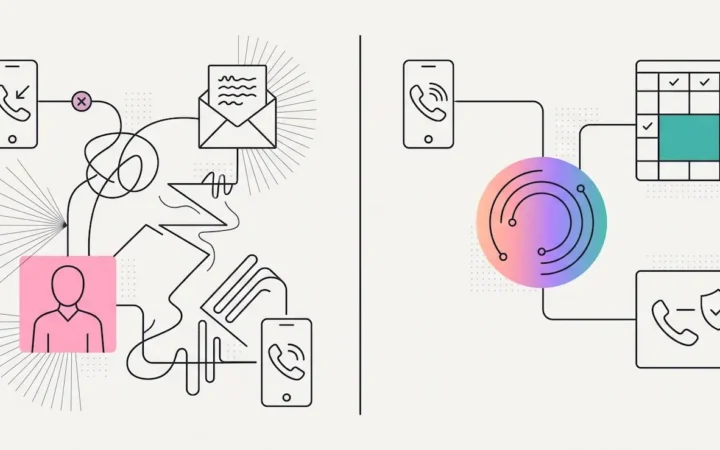
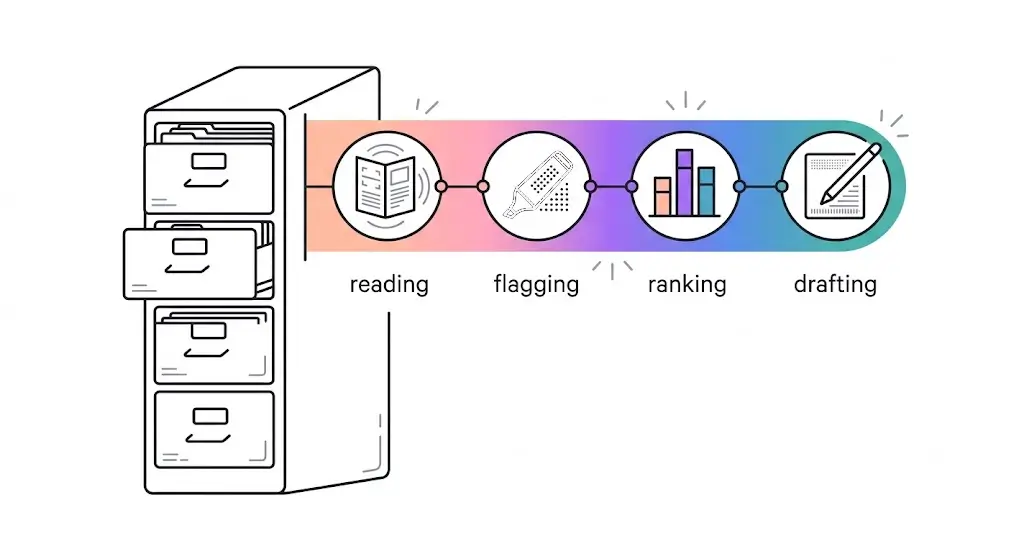
Most dental software is a filing cabinet with a login. It stores the schedule, the charts, the ledgers, the messages — and when you need something, you go retrieve it. That’s a system of record, and practices genuinely need one. But notice what it never does: it never tells you the 2pm is unconfirmed, the case at 3 deserves preparation, the email from this morning is about a disputed bill, or the patient in operatory two has been waiting too long. Retrieval is your job. All day. Across six screens. The real question a front desk asks from open to close — “what needs my attention, and what should I do about it?” — is the one question a system of record cannot answer. Dental front office software that actually helps has to be a different kind of thing: a system of action.
What Dental Front Office Software Does Differently
It sits on top of the records the practice already has and does the reading, so the team can do the deciding:
- The schedule reads itself. Every appointment is checked against the practice’s rules — flagged, color-coded, and analyzed into a briefing before the day starts.
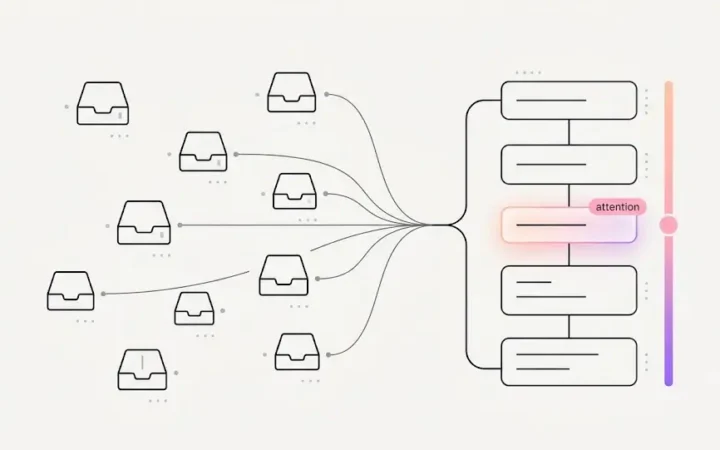
- Everything needing a human lands in one ranked list. Calls, texts, emails, insurance issues, overdue forms — one triage inbox, each item pre-read, in context, with its next step.
- Patient communication talks back — and acts. Patients messaging that’s an actual conversation lets patients book, reschedule, and get answers inside the message thread, around the clock, under rules the practice controls.
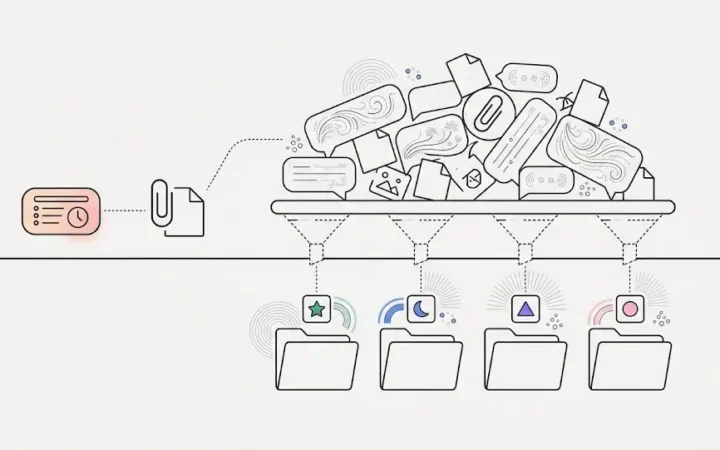
- Diagnosed treatment gets a whole engine. Prepared case conversations, honest numbers, one-tap acceptance, personal follow-up — the case acceptance machine.
- The practice’s standards run themselves. The owner’s rules live in a playbook the system executes — on every interaction, at every desk, whether the owner is in the building or not.
Underneath all of it sits one philosophy, worth its own reading: AI does the reading and preparation; humans make the decisions. Nothing consequential happens without a person; nothing routine waits for one.
Why Adding More Dental Front Office Software Kept Making It Worse
The standard response to front-desk overload has been more tools — a reminder tool, a forms tool, a texting tool, a reputation tool — each with its own login, its own inbox, its own version of the patient. The result is the modern front desk: six screens, no ranking, and a coordinator whose actual job has become integrating software with their attention span. The cracks between tools are where the crown goes unscheduled and the lapsed patient disappears — the expensive, invisible failure we’ve written about elsewhere. A system of action isn’t another tool on the pile; it’s the layer that reads the pile so a human doesn’t have to.
What Real Dental Front Office Software Means for the People in the Building
For the team: the work that consumed the day — reading, sorting, drafting, chasing, looking things up — largely disappears, and what’s left is the part that needs a human: judgment, care, connection. A first-week hire performs with a veteran’s awareness because the awareness is on the screen. For the owner: standards that enforce themselves, a schedule with nothing hiding in it, and the rarest commodity in practice ownership — looking at tomorrow without anxiety. For the patient: a practice that answers at 9pm, remembers them at the door, tells them honestly what things cost, and never lets them quietly slip away.
That’s the whole idea, and every piece of it is its own deep dive — the calendar, the inbox, the conversations, the case engine, the playbook, the philosophy. Start where your front desk hurts most. Or see the working surface itself on the ELVA Calendar page.
Frequently Asked Questions
What should dental front office software actually do?
Answer the front desk’s only real question — “what needs my attention, and what should I do about it?” — continuously. That means reading the schedule, messages, insurance, and forms automatically; ranking what needs a human; preparing the context; and acting on the routine under the practice’s rules. Storage and retrieval alone leave the hard part to the team.
What’s the difference between a system of record and a system of action?
A system of record stores and retrieves — the schedule, charts, and ledgers, fetched when you ask. A system of action sits on top of those records and does the reading: it checks, flags, ranks, drafts, and prepares, so the team starts every task with the work already understood. One holds information; the other surfaces what matters.
Does ELVA FrontDesk replace the practice management system?
No — it reads the practice’s existing PMS data and works on top of it, so the practice keeps its source of truth without a migration. The system of record stays; the system of action is the layer it was always missing.
Does a system of action mean AI making decisions for the practice?
The opposite, by design: AI does the reading and preparation; humans make the decisions. Anything consequential is held for a person; routine work flows automatically only under rules the practice set; and everything the AI does is logged. The practice decides what runs on its own — and is never surprised.
Where should a practice start with FrontDesk?
Where it hurts most. Schedule chaos points to the self-checking calendar; drowning in channels points to the triage inbox; lost production points to the case acceptance engine; inconsistency across staff or locations points to the Clinic Playbook. They’re one system — any entry point reaches the rest.
Stop retrieving. Start deciding. See the ELVA Front Desk, or begin with the piece your day is missing: the one list that catches everything.