Every dental practice runs on experience that lives in a few people’s heads. The veteran coordinator knows which patients are nervous, how to word the text that gets a “yes,” which gap in the schedule is worth chasing, and what the doctor wants done in a hundred small situations. None of it is written down — most of it can’t be, in any form a binder could hold. So when that person is out, the practice feels it by lunchtime. When they leave, the practice resets. And every new hire spends months slowly re-deriving knowledge the practice already paid for once — which is exactly the gap a dental practice playbook is built to close.
The fix isn’t a thicker training manual. It’s changing where the experience lives. A dental practice playbook is the practice’s rules, preferences, and standards — captured once, in a system that applies them to every patient interaction automatically. In ELVA, that’s the Clinic Playbook, and it’s the spine the entire front office runs on.
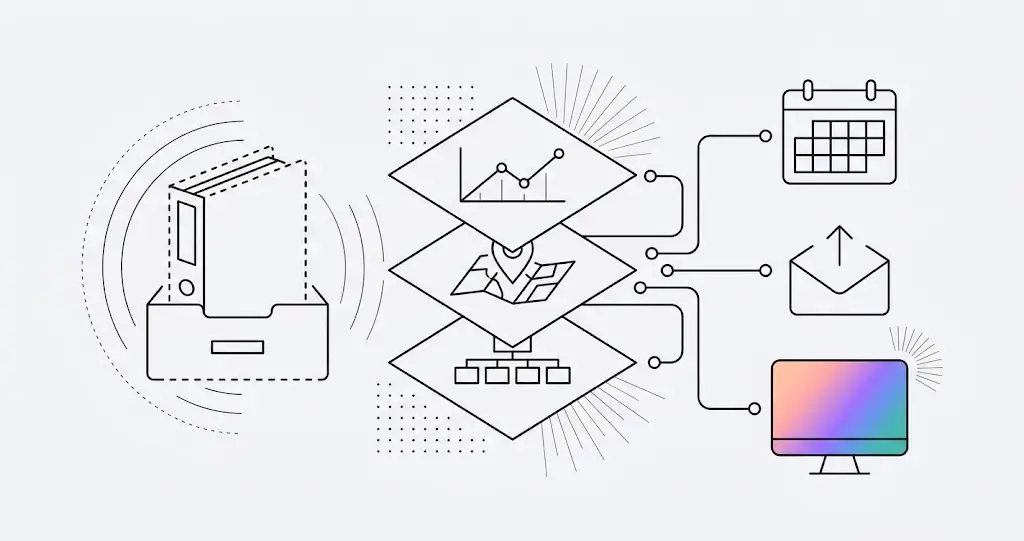
How the Dental Practice Playbook Is Layered
- Organization-wide rules sit on top — the standards that define the practice everywhere it operates.
- Individual-location rules refine them — the adjustments that make sense for one office without breaking the standard.
- ELVA’s AI brain for dental practices fills in the rest — sensible defaults wherever the practice hasn’t specified, so nothing is ever undefined.
Guidance is always the practice’s way first, the location’s adjustments second, and defaults only where neither has spoken. The owner configures it once; every team member is then guided by that configuration automatically — whether they’ve been there ten years or ten minutes.
A Dental Practice Playbook That’s Live, Not Laminated
The reason most practice SOPs fail isn’t that they’re wrong — it’s that they’re documents. They sit in a drawer, drift out of date, and depend on a busy human remembering to consult them at exactly the moment they’re busiest. The Clinic Playbook is different in kind: it isn’t read by people, it’s executed by the system. It shapes, continuously and automatically:
- What gets flagged — what “needs attention” means on the calendar is the practice’s definition, not a vendor default.
- How replies are drafted — patient messages are written in the practice’s voice, and rules like “never answer financial questions by email” are simply enforced; ELVA holds those for a person.
- How treatment is framed — what the team is prompted to prepare and present follows treatment plan presentation standards.
- What ELVA may do on its own — the boundary between “handled automatically” and “held for a human” is drawn by the practice, per situation.
- What the team is guided to do next — step-by-step guidance through the day, with each step traceable to a practice rule rather than a guess.
A binder hopes to be followed. The playbook can’t not be followed — it’s the rails the software runs on.
What a Dental Practice Playbook Changes for the People
For the owner, it solves the problem nobody can solve by hovering: you can’t stand over the front desk all day, and you can’t control how every staffer handles every patient in the moment. With the playbook, you don’t have to — your judgment is present at the desk whether you are or not. Control without micromanaging.
For the team, it ends the era where being good required years of absorbed tribal knowledge. A first-week hire is guided, step by step, by the same rules the ten-year veteran internalized — which is why the experience gap closes in days, not months. And for the practice, it ends the structural fragility of dental practice knowledge loss: the standard belongs to the practice now, not to a memory.
For a group, this is the mechanism behind the philosophy: DSO standardization vs autonomy — one organizational standard on top, location-level refinement underneath, enforced the same way in every office.
Your Dental Practice Playbook Stays Yours
One more property, and for many owners it’s the deciding one: the Clinic Playbook is the practice’s private knowledge, and ELVA does not train its global models on it. The way your practice runs — the standards you’ve refined, the voice you’ve built, the rules you’ve learned the hard way — is a competitive asset. Teaching it to your software, the way an AI learns your practice, doesn’t mean donating it to everyone else’s. Set the rules once; they work for you, and only for you.
The playbook is the spine — the scenario-by-scenario story of what it guides (the morning huddle, the insurance conversation, the day’s triage) is its own series. See it running underneath the front office in the calendar.
Frequently Asked Questions
What is a dental practice playbook?
The practice’s rules, preferences, and standards — protocols, voice, thresholds, permissions — captured once in a system that applies them to every patient interaction automatically. Unlike an SOP binder, it’s executed by the software rather than read by busy people, so it can’t drift or be skipped.
How is the Clinic Playbook different from an SOP manual?
An SOP manual depends on a human consulting it at the busiest possible moment; the Clinic Playbook is live — it shapes what gets flagged, how replies are drafted, how treatment is framed, what runs automatically versus waits for a person, and what the team is guided to do next. A binder hopes to be followed; the playbook is the rails the system runs on.
What happens where the practice hasn’t set a rule?
ELVA’s baseline knowledge fills in with sensible defaults, so nothing is ever undefined — but the hierarchy always runs the practice’s way first: organization-wide rules on top, individual-location refinements second, defaults only where neither has spoken.
Does ELVA learn from my practice’s playbook to improve for other practices?
No. The playbook is the practice’s private knowledge, and ELVA does not train its global models on it. The standards a practice has refined stay the practice’s competitive asset.
Can different locations in a group have different playbook rules?
Yes — by design. Organization-wide rules define the group’s standard; each location can refine within it. That’s standardization with local judgment intact: one standard everywhere, adjusted where a specific office genuinely needs it.
Put the experience in the system. See the playbook at work in the AI dental scheduling calendar, or what it powers next: dental case acceptance rate engine.