For an emerging dental group scaling past five locations, few operational friction points destroy case acceptance faster than the prior authorization bottleneck. High-value treatments like implants, complex oral surgery, orthodontics, and extensive prosthodontics represent the highest margin procedures in your practice. Yet, these exact procedures are routinely delayed for weeks because front desk teams are stuck faxing clinical narratives, navigating clunky payer portals, and waiting on hold with insurance representatives.
Every single day a patient waits for financial clearance is another day they lose clinical urgency, drastically increasing the likelihood they will cancel or postpone their treatment indefinitely. Relying on manual workflows for these critical approvals is a silent margin killer that scales linearly as you add more practices. This is exactly why multi-location clinical operations are pivoting to dental prior authorization software to systematically track, draft, and manage payer approvals without human delay.
Predeterminations vs. Prior Authorizations: The Cost of Guessing
A common and incredibly expensive failure mode in growing practices is front desk staff confusing a predetermination with a strict prior authorization. Because payer rules change constantly, administrative staff often guess which form is required, leading to catastrophic, unrecoverable denials after the procedure has already been completed.
- Predeterminations: A completely non-binding estimate of coverage. If a payer requires an authorization but the front desk only submits a predetermination, the subsequent claim will be denied automatically.
- Prior Authorizations: A binding medical necessity requirement that guarantees payment parameters. Missing the exact expiration window or performing the procedure one day early means the authorization is void and the revenue is lost.
Technology removes this guesswork entirely. Utilizing dental pre-determination automation ensures that the system cross-references real-time payer rules instantly, distinguishing perfectly whether a non-binding estimate or a strict prior authorization is legally required before treatment begins.
The Manual Workflow “Black Hole”
To understand why revenue leaks, you have to look at the manual steps your staff takes for a single complex case. First, the treatment coordinator identifies the code. Second, they dig through the patient’s chart to find the relevant digital radiographs, periodontal charting, and clinical notes. Third, they compile this into a portal submission or fax. Fourth—and this is where the system breaks—they must manually remember to follow up a week later to check the status.
In a bustling multi-location group, that follow-up simply does not happen. Authorizations sit in a “pending” status for weeks. Patients are told, “We will call you when insurance gets back to us,” effectively ending the sales cycle. To fix this, practice leaders must implement dental prior authorization automation to handle the entire lifecycle of the request without relying on human memory or manual sticky notes.
The Pre-Auth Delay Cost Calculator
When a patient leaves the operatory after accepting a comprehensive treatment plan, their emotional and clinical urgency is at its absolute peak. If your staff takes 14 days to secure approval, patient drop-off skyrockets. Here is the financial reality of manual delays across a standard 10-location group.
| Approval Turnaround Time | Patient Drop-Off Rate | Unbooked Treatment per Location (Monthly) | Annual Margin Lost (10 Locations) |
|---|---|---|---|
| 14+ Days (Manual Fax/Calls) | 35% Drop-Off | $18,000 | -$2,160,000 |
| 7-10 Days (Portal Check) | 20% Drop-Off | $10,000 | -$1,200,000 |
| 1-3 Days (AI Automation) | < 5% Drop-Off | $2,500 | -$300,000 (Maximum Recapture) |
How Artificial Intelligence Recaptures High-Value Revenue
Scaling groups cannot simply hire more administrators to brute-force the authorization queue. A centralized billing office gets just as overwhelmed by portal logins as a local front desk. Instead, modern dental revenue cycle management requires deep technological integration directly into the practice management system.
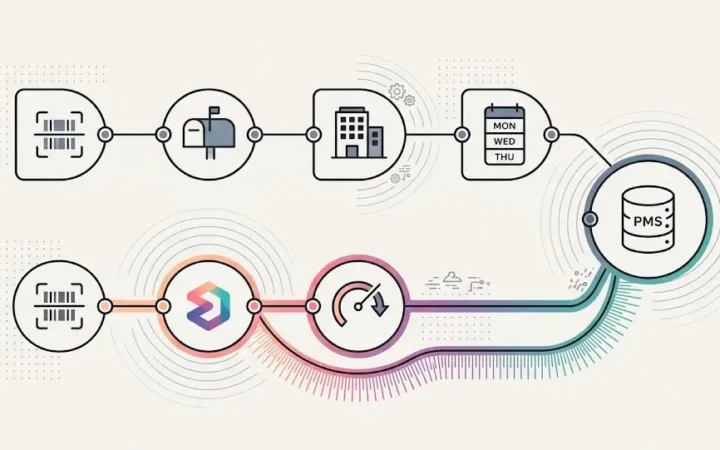
By constantly monitoring the schedule, the software automatically detects when high-value dental treatment plans are presented to a patient and contain CDT codes that trigger payer approval rules. It instantly drafts the request, pulls the supporting clinical documentation, and monitors the submission against the specific payer’s deadline. If an approval is granted but the patient has not been scheduled, the software alerts your team to immediately reach out and book the procedure, closing the loop on case acceptance.
Eliminating Denials Through Perfect Documentation
The primary reason authorizations are denied or pended by insurance carriers is missing clinical narratives or outdated radiographs. Therefore, speeding up dental pre-auths is not just about submitting forms faster; it is about submitting mathematically perfect documentation on the very first try.
Intelligent platforms scan the patient’s clinical record, extract the precise evidence required by that specific payer’s medical necessity criteria, and attach it to the request seamlessly. If the approval is secured but the scheduled appointment date eventually shifts past the authorization’s strict expiration window, the system automatically flags the risk before an automated dental claim submission goes out and triggers an unrecoverable denial.
The Foundation for Uncapped Scale
Removing the authorization bottleneck does more than just improve cash flow—it completely transforms the patient experience. Instead of telling patients to wait weeks for an answer, your treatment coordinators can confidently navigate financial conversations and schedule complex care while the patient is still in the building.
Deploying advanced dental DSO software that autonomously manages the prior authorization lifecycle allows growing groups to expand their footprint, maximize the ROI of their high-producing specialists, and standardize operational excellence without perpetually scaling their administrative payroll.