
Every multi-location leader carries the same two-part problem. Part one: the patient experience should be the organization’s standard, everywhere — not twenty local interpretations of it. Part two: you can’t be in twenty buildings, and the harder you push standardization through memos and training decks, the more it depends on the exact thing you can’t control — whether each front desk, in each moment, remembers and follows the deck. To standardize dental front desk operations across locations, most groups choose between hovering (regional managers auditing behavior) and hoping (publish the SOP, trust the floor). Both are expensive. Neither works at twenty sites.
The structural fix is to stop asking people to carry the standard and put it where it executes itself: in the system every front desk already works in.
How a standard becomes self-enforcing
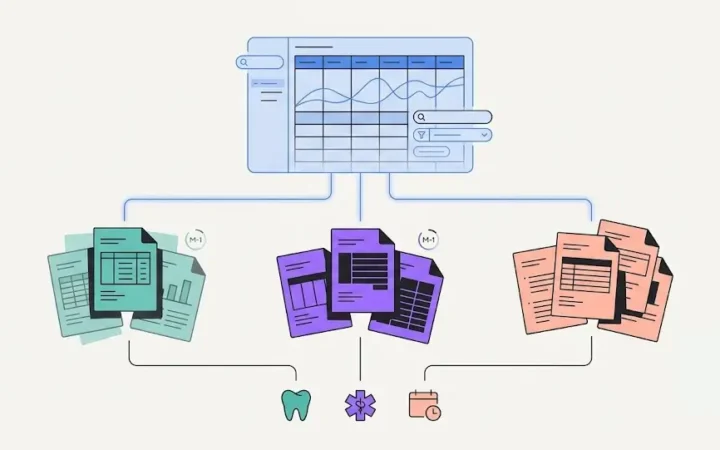
- Organization rules sit on top. The group defines its standard once in the Clinic Playbook — what gets flagged, how patients are communicated with, what runs automatically versus waits for a person, what “needs attention” means.
- Locations refine, within the standard. Each office adjusts for its genuine local realities — without being able to drift from the organizational floor.
- The system applies it, every interaction. Every calendar check, drafted reply, guidance step, and triage ranking in every location follows those rules automatically. A staffer can’t overlook the big case or skip the unconfirmed patient — the system flags it, colors it, and surfaces it, identically in location one and location twenty.
This is the difference between a standard that’s published and one that’s running. A memo hopes; a playbook executes. Compliance stops being a behavior you audit and becomes a property of the software the work happens in.
Why this beats the two old options
Against hovering: regional managers stop spending their time auditing whether the basics happened — the basics are enforced — and start spending it on the judgment calls that actually need a senior human. Against hoping: the gap between “what the SOP says” and “what happened at the desk on a busy Tuesday” closes, because the SOP isn’t a document the desk consults; it’s the rails the desk’s software runs on. The owner’s judgment is present at every front desk, at all times, without the owner being anywhere.
And the standard survives people. Multi-location groups churn front-desk staff constantly; when the standard lives in the system, a new hire at any location performs to it from week one, and a veteran leaving doesn’t take the location’s quality bar with them. Uniform onboarding, uniform floor, no retraining wave every time a region turns over.
Standardization without strangling judgment
The classic DSO fear is that standardization means strangling the local judgment that makes a good office good — a tension we’ve written about as the standardization-versus-autonomy trap. The layered playbook is the way out of the trap, mechanically: the organization standardizes the floor (safety, compliance, communication rules, financial handling), locations keep their judgment above it (their adjustments, their local realities), and humans keep the decisions that need humans — the system holds anything consequential for a person, per the rules. The group gets less variance where variance is waste, and keeps autonomy where autonomy is the point.
One more property matters at group scale: what the playbook enforces, it also evidences. Every flag raised and rule applied is the same in every location, which means performance differences between offices finally mean something — you’re comparing execution, not comparing twenty different definitions of “handled.” See how groups run it on the ELVA for DSOs & Group Practices page.
Frequently Asked Questions
How do you standardize dental front desk operations across locations?
Put the standard where it executes instead of where it’s remembered: organization-wide rules defined once in a playbook, location-level refinements within them, and a system that applies those rules to every calendar check, patient reply, and task ranking automatically — identically in every office, with no dependence on memos or memory.
What’s wrong with SOPs and training for multi-location standardization?
They depend on behavior under pressure. A published SOP requires each front desk, in each busy moment, to remember and follow it — and auditing that across twenty locations means hovering. A standard built into the software the work happens in can’t be skipped, so compliance becomes a property of the system rather than a behavior to police.
Can locations still adapt to local needs?
Yes — by design. Organization rules form the floor; each location refines within it for its genuine local realities. The group standardizes where variance is waste and preserves judgment where judgment is the point.
How does this handle front desk turnover across a group?
The standard survives the people. New hires at any location are guided to the organizational standard from week one, and a departing veteran doesn’t take the location’s quality bar with them — no retraining wave, no drift while a region rebuilds.
Does standardized enforcement improve cross-location reporting?
Yes, in a subtle way: when every location runs the same rules, performance differences between offices reflect real execution differences — not twenty local definitions of what “handled” means. The standard that enforces also evidences.
Make the standard self-enforcing. See ELVA for DSOs & Group Practices, or the mechanism underneath: the Clinic Playbook.