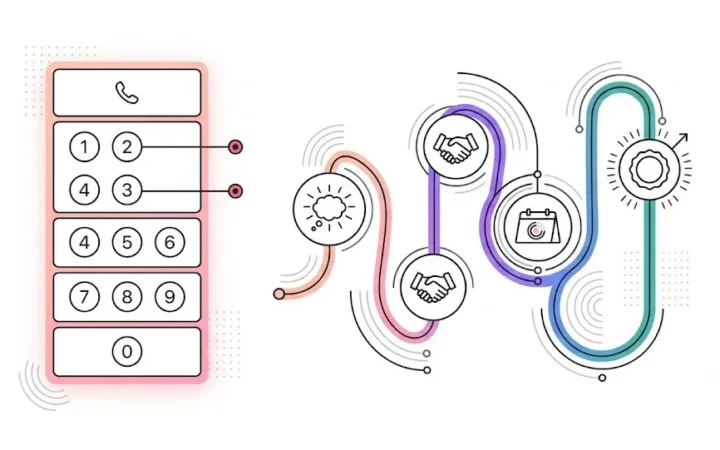
Think about what a dental visit asks of someone who isn’t comfortable in English. Call during business hours and navigate a fast conversation about insurance terminology. Decode a reminder text. Ask a question about cost — out loud, in a language that makes them feel one step behind — or bring a family member to translate their own healthcare. Most of these patients don’t complain about any of this. They just engage less: shorter answers, fewer questions, postponed treatment, and eventually, quietly, a different practice — often the one where somebody at the desk happens to speak their language. For a multilingual dental office, language isn’t a nice-to-have feature; it’s the difference between patients who are managed and patients who belong.
How it works: their words, in and out
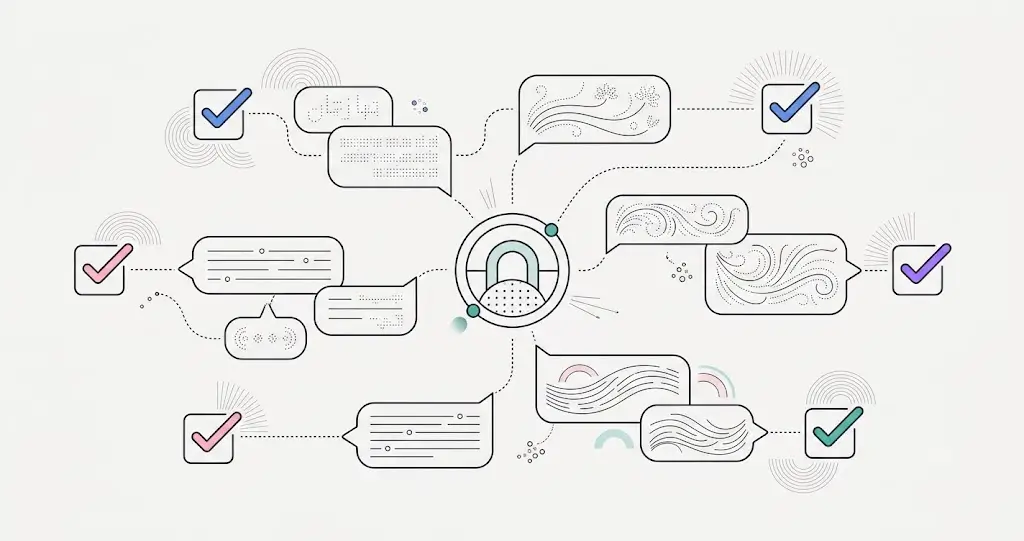
ELVA’s patient conversations are multilingual in every direction that matters: a patient can text or email the practice in their own language — Spanish, Vietnamese, Farsi, whatever they’re comfortable in — and ELVA understands, answers, and acts in that same language, automatically, with the same warmth and accuracy as its English replies. Booking, rescheduling, insurance questions, pricing in the practice’s chosen style, FAQs from the knowledge base — the full set of work that completes in the thread completes in the patient’s language. No separate line, no “press 2,” no waiting for the bilingual staffer’s shift.
And it’s not only the conversations: the practice’s proactive outreach — recall, follow-up, reminders — is written for each specific patient, and the patient’s preferred language is part of what “for them” means. The reminder about their crown arrives in the language they think in.
Why this builds loyalty, not just access
The mechanical benefit is obvious — questions get asked, instructions get understood, no-shows drop when reminders are actually read. The deeper effect is emotional. A patient who has spent years navigating healthcare in their second language knows exactly how rare it is to be answered — instantly, warmly, correctly — in their first. That moment doesn’t register as a software feature. It registers as this practice gets me, and it converts into the two behaviors every practice wants most: they stay, and they tell people. Word-of-mouth runs strongest through exactly the communities where language is the barrier — a practice that’s genuinely easy in a family’s language tends to acquire the family, then the family’s friends.
The team’s reach, extended
For the front desk, this removes an unwinnable staffing problem. No hiring plan covers every language a patient roster speaks, and the bilingual team member can’t be the permanent unpaid translator for an entire practice. With the conversational layer fluent in the patient’s language — and operating under the same per-channel rules as every other conversation — the team serves patients it literally couldn’t converse with before, and anything needing a human still routes to one, with the exchange already understood and summarized. The desk’s care stops being bounded by the desk’s languages.
See the conversation layer on the ELVA Two-Way Texting page.
Frequently Asked Questions
How does a multilingual dental office handle patient communication?
Best case: the patient writes in whatever language they’re comfortable in, and the practice’s side understands, answers, and completes the work in that same language — booking, rescheduling, insurance and pricing questions, reminders — automatically, without a separate line or waiting for bilingual staff.
Which languages does ELVA support in patient conversations?
Patients can write in their own language and receive warm, accurate replies in kind — the conversation meets the patient where they are rather than maintaining a fixed menu of options. Outbound messages like recall and reminders also go out in the patient’s preferred language.
Does multilingual messaging reduce no-shows?
It removes one quiet cause of them: reminders that weren’t fully understood. A confirmation a patient actually reads — and can answer with a question, in their own words — protects the appointment better than one they have to decode.
What happens when a non-English conversation needs a human?
It routes to the team like any other — already read, summarized, and attached to the patient’s context — so staff step in informed even when they don’t speak the language the conversation happened in.
Why does language matter for patient loyalty?
Because being answered instantly and warmly in your first language, in a healthcare setting, is rare enough to register as care rather than software. Patients who feel genuinely understood stay — and they refer through exactly the communities where language is the barrier.
Be the practice that gets them. See ELVA Two-Way Texting, or the conversation it belongs to: messaging that talks back.